Administrative Compliance and Subsidy Verification in Kolkata
Municipal authorities report that a significant fraction of residents have yet to complete mandatory digital identity verification for subsidized domestic gas connections. This compliance gap threatens to interrupt essential household utility subsidies.
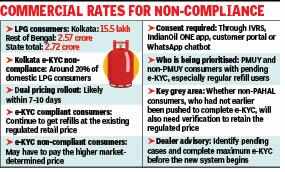
The digitalization of state welfare distribution relies entirely on universal biometric and electronic verification among beneficiary populations. In Kolkata, administrative audits reveal that roughly twenty percent of domestic liquefied petroleum gas consumers have failed to update their mandatory electronic records. This compliance lag persists despite repeated public extensions and administrative outreach campaigns. The friction here lies at the intersection of technological mandates and the socio-economic realities of urban populations, where elderly or transient residents frequently struggle with digital interfaces. Administrative agencies face a difficult choice between enforcing strict cutoff deadlines that risk denying vulnerable households essential fuel subsidies or tolerating endless verification delays that compromise database integrity. The downstream casualty of continued non-compliance will be the suspension of direct benefit transfers for thousands of households, forcing them to purchase fuel at commercial market rates. For the state administration, the challenge highlights the limits of top-down digital integration in welfare systems. Bridging this gap requires intensive ground-level mobilization rather than automated notifications.
Comments 0