Agricultural Resilience Yields Record Partridge Numbers in Lincolnshire
British agricultural land management practices registered a dramatic biological recovery marked by a historic surge in wild partridge populations. Farmers managing rural acreage noted that deliberate habitat preservation directly fueled the unprecedented avian population explosion.
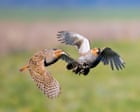
Across the rolling fields of Brigg in Lincolnshire, agricultural producer Colin Chappell reported observing the largest concentration of wild partridges in decades during routine field preparations. This biological upswing was not an accidental occurrence, but rather the direct cumulative result of years of disciplined environmental stewardship and regenerative farming techniques. By carefully integrating crop rotation with untouched conservation margins, the farm created an optimal sanctuary for ground-nesting game birds. Industrial agriculture frequently prioritizes maximum yield extraction at the expense of local biodiversity, creating severe ecological imbalances across rural Europe. However, this case demonstrates that commercial viability and ecological preservation can coexist when regulatory incentives reward habitat restoration. The underlying tension remains the economic pressure on farmers to convert marginal set-aside land into high-intensity cash crop production. The tangible outcome of this successful conservation effort will likely encourage neighboring agricultural holdings to adopt similar regenerative frameworks to qualify for upcoming government environmental grants. Over the next year, local conservation authorities will point to these rising partridge numbers as empirical proof that voluntary ecological stewardship outperforms rigid top-down regulatory mandates.
Comments 0