AMD's Market Surge Signals a Structural Shift in the AI Chip Hierarchy
Advanced Micro Devices has secured a decisive foothold in the artificial intelligence sector, reporting tangible revenue growth that challenges the prevailing dominance of its primary competitor. This financial performance has triggered a significant reassessment of market valuations, positioning AMD as a credible alternative for enterprises seeking to diversify their hardware dependencies.
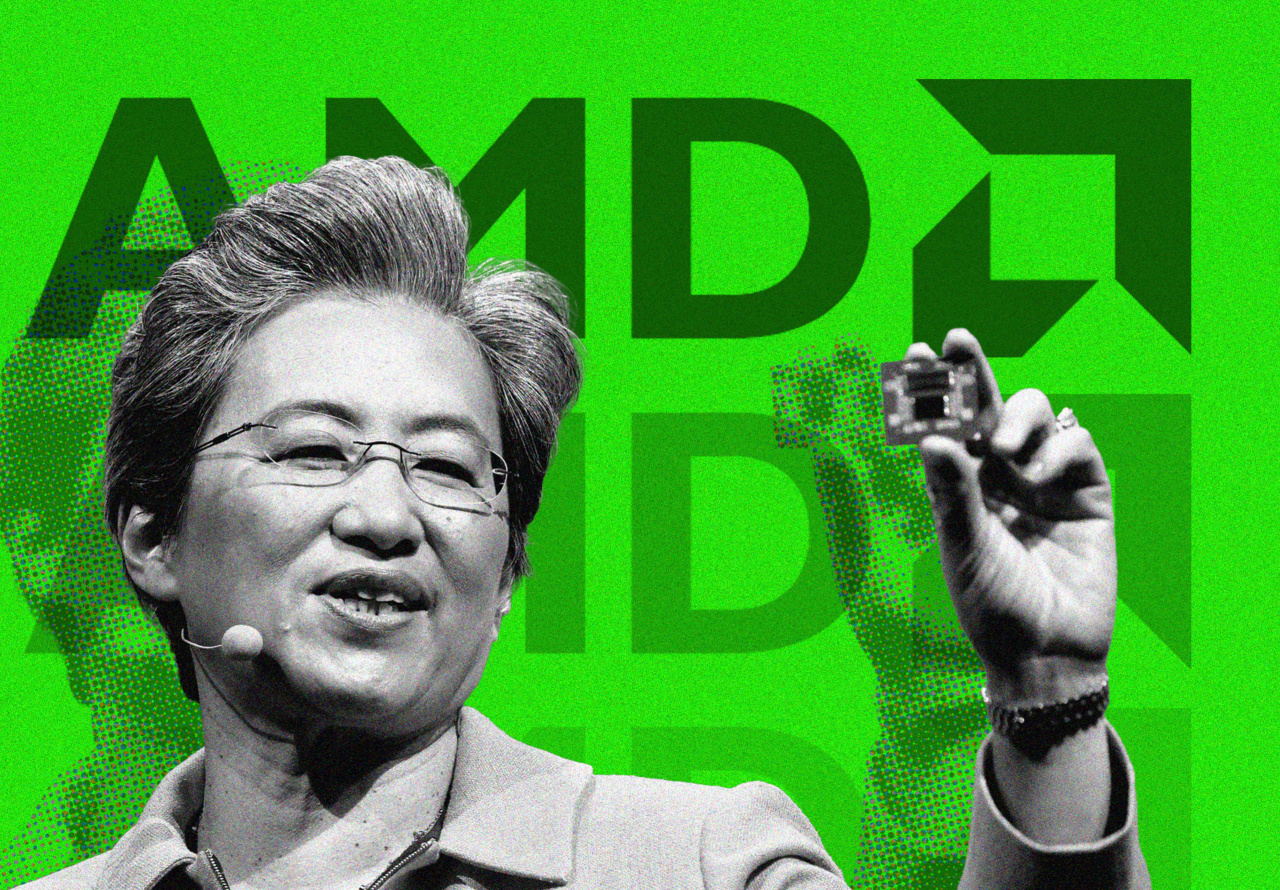
The immediate rupture in the semiconductor market is defined by a tangible shift in investor confidence, moving beyond speculative hype to validated commercial performance. AMD's recent disclosures indicate that its AI accelerators are generating substantial revenue, a metric that had previously eluded the company in the face of aggressive competition. This concrete financial outcome has driven a sharp ascent in the stock price, signaling that the market is no longer viewing the AI chip race as a monolithic contest but rather a competitive field where multiple vendors can capture significant share. The rise is not merely a correction but a revaluation of the company's capacity to sustain growth in a high-stakes technological domain.
The underlying tension stems from the institutional friction between established market leaders and emerging challengers in the data center infrastructure. For years, the narrative of AI hardware was dominated by a single supplier, creating a bottleneck that concerned large enterprises and cloud providers wary of supply chain risks. AMD's progress disrupts this equilibrium by offering a viable second source, thereby introducing a competitive dynamic that pressures pricing and accelerates innovation. This friction is not merely commercial; it represents a broader geopolitical and strategic maneuvering where the diversification of critical technology suppliers is viewed as a matter of national and corporate security.
The downstream consequences of this shift are already manifesting in the procurement strategies of major technology firms and sovereign wealth funds. As AMD demonstrates its ability to deliver at scale, enterprises are likely to adopt a multi-vendor approach, reducing their exposure to the vulnerabilities of a single supplier. This diversification will likely lead to a more fragmented but resilient AI infrastructure, where the bargaining power shifts from the chip maker to the buyer. The long-term impact is a market that is less susceptible to supply shocks and more responsive to performance and cost efficiency, fundamentally altering the economics of large-scale AI deployment.
Comments 0