Bengal's Judicial Standoff: High Court Stay on KMC Polls Escalates to Supreme Court
The West Bengal government has moved the Supreme Court to overturn a High Court stay on Kolkata Municipal Corporation elections, challenging the delimitation of the Howrah constituency in a high-stakes legal battle. This judicial escalation reflects deepening institutional friction over electoral integrity and administrative control in one of India's most politically contested states.
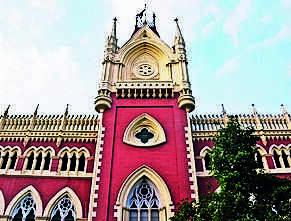
The concrete rupture in West Bengal's political is the formal appeal filed by the state government to the Supreme Court against the High Court's decision to stay the KMC polls. The core of the dispute centers on the delimitation of the Howrah constituency, a move that the government argues is legally sound and necessary for electoral fairness, while the judiciary has paused the process pending further review. This legal maneuvering halts the democratic process in Kolkata, leaving millions of voters without a clear timeline for local governance elections. The stakes are high, as the outcome will determine the balance of power in one of India's largest municipal bodies and set a precedent for future electoral disputes in the state.
The underlying tension is rooted in the perennial conflict between the executive branch's desire for electoral control and the judiciary's role as a check on administrative power. The delimitation of Howrah is not merely a technical adjustment but a politically charged act that could alter the electoral map in a region where every seat is fiercely contested. The government's move to the Supreme Court signals a refusal to accept the High Court's interpretation, suggesting a broader strategy to bypass judicial obstacles that impede its political agenda. This friction is exacerbated by the polarized political environment in West Bengal, where any perceived bias in electoral processes is viewed as an existential threat by opposition parties, leading to immediate legal challenges and public protests.
The downstream casualties of this judicial standoff include the erosion of public confidence in the electoral process and the potential for prolonged political instability in Kolkata. The delay in KMC elections means that the city's governance remains in a state of limbo, with interim arrangements that may lack the democratic mandate necessary for effective decision-making. For the citizens of Howrah and Kolkata, the outcome of this legal battle will determine whether their local representatives are chosen through a process they perceive as fair or one that is tainted by executive overreach. The incident also highlights the increasing tendency of state governments to use the highest court as a forum for political disputes, a trend that strains the judiciary's capacity and undermines its perceived neutrality.
Comments 0