Climatic Anomalies Threaten Agricultural Stability as Scientists Warn of Severe El Niño Impacts
Climatologists have issued warnings regarding an intensified El Niño cycle paired with anomalous ocean warming across the region. The convergence threatens traditional agricultural calendars and rural economic output.
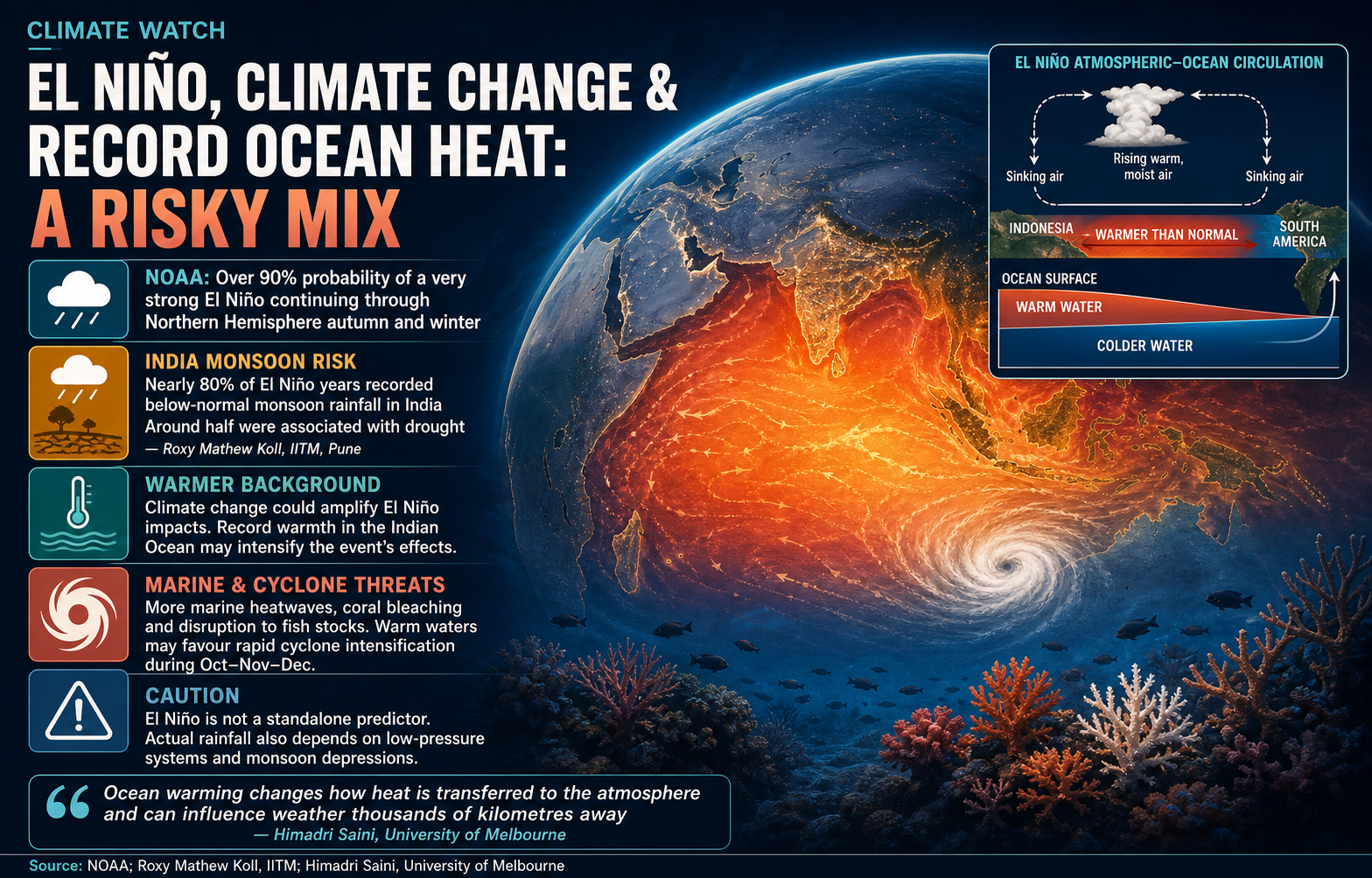
Meteorological models indicate that atmospheric conditions are aligning for a severe disruption of seasonal precipitation patterns across the subcontinent. Researchers point to sustained thermal anomalies in surrounding maritime waters that threaten to amplify climatic extremes, transforming expected monsoon distributions into erratic dry spells and torrential cloudbursts. The scientific consensus points away from historical predictive baselines toward an era of volatile weather phenomena. This climatic shift brings underlying infrastructural vulnerabilities into sharp focus, particularly the reliance of agrarian communities on predictable seasonal rainfall. State agricultural departments find themselves constrained by outdated irrigation networks and inadequate grain storage facilities designed for twentieth-century weather paradigms. The friction between long-term ecological adaptation and short-term political relief measures continues to hinder comprehensive rural planning. The downstream impact of these meteorological extremes threatens rural household incomes and national food price stability. Crop failures in core agricultural regions will inevitably transmit inflationary shocks through domestic supply chains, necessitating aggressive government intervention and food security management.
Comments 0