Delhi Police Purges Five Hundred Posts as Protests Escalate
The Delhi Police has removed five hundred social media posts in response to ongoing anti-CEC demonstrations, citing the spread of misinformation and AI-generated content. This aggressive digital curation marks a significant escalation in state control over public discourse during a period of heightened civil unrest.
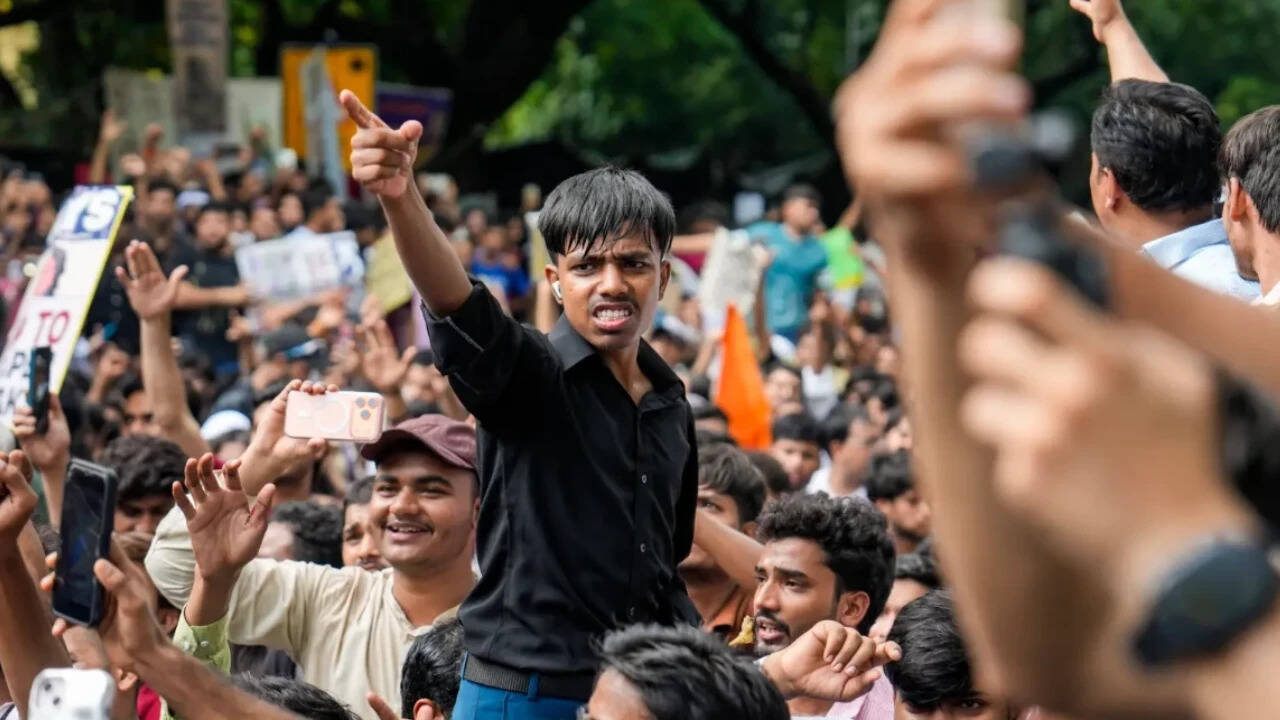
The concrete rupture in the current political climate is the systematic takedown of five hundred social media posts by the Delhi Police. This action was taken amidst the anti-CEC protests, with authorities explicitly targeting content they deemed fake or generated by artificial intelligence. The move signals a shift from passive monitoring to active suppression of digital narratives that challenge the official stance on electoral integrity. By removing these posts, the police force has effectively narrowed the channel of public expression, forcing dissenters to operate in more clandestine or offline spaces where state surveillance is less immediate.
The underlying tension stems from a deep institutional friction between the executive branch and the judiciary, which has spilled over into the digital sphere. The protests are a direct response to perceived encroachments on the independence of the Election Commission of India, and the police crackdown is viewed by critics as an attempt to manage the optics of this constitutional crisis. The use of AI detection as a pretext for takedowns introduces a new layer of ambiguity, as the boundaries between legitimate criticism and malicious disinformation remain poorly defined in Indian law. This ambiguity allows the state to exercise broad discretionary power over what information is permitted to circulate among the populace.
The downstream casualties of this digital purge are the journalists and citizens who rely on social media as a primary tool for accountability and mobilization. The removal of posts disrupts the flow of real-time information, making it difficult for the public to verify events as they unfold. This creates an information vacuum that is often filled by state-aligned narratives, further polarizing the electorate. The tangible outcome is a chilling effect on free speech, where individuals self-censor to avoid potential legal repercussions, thereby weakening the democratic feedback loop that is essential for a functioning republic.
Comments 0