Delhi's Iron Fist: 3,000 Detained as CJP Protests Collide with State Power
The Indian capital witnessed its most aggressive crackdown in years, with over 3,000 individuals detained during the CJP-led demonstrations against the CEC appointment. This mass preventive action signals a decisive shift in how the central government manages dissent, prioritizing institutional control over public assembly.
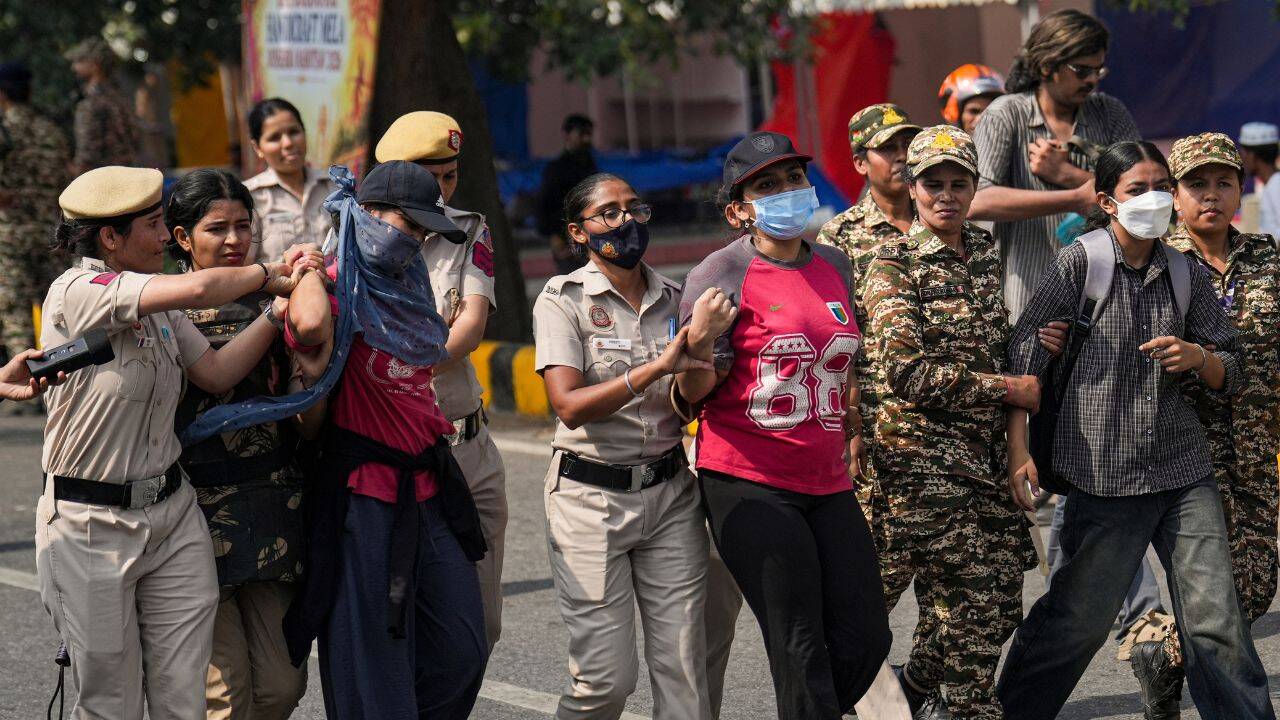
The streets of New Delhi, typically a theater of political debate, transformed into a zone of strict containment as the CJP alliance, alongside AAP and Left parties, mobilized against the perceived illegitimacy of the new Election Commission of India leadership. The scale of the state's response was unprecedented; police forces did not merely disperse crowds but executed a sweeping net of preventive detentions, holding 600 individuals with prior criminal records and thousands of others in custody. The visual spectacle of barbed wire and armored vehicles surrounding key landmarks marked a rupture in the norms of protest management, replacing negotiation with absolute physical restriction.
The underlying tension stems from a fundamental disagreement over the independence of electoral institutions. The opposition argues that the CEC appointment process was compromised by executive overreach, threatening the integrity of future elections. In response, the ruling coalition, led by the BJP, has framed the protests as an attempt to destabilize a government elected by the people, asserting that the country is governed by Parliament, not the streets. This institutional friction has hardened into a standoff where legal challenges are met with physical barriers, and political rhetoric is answered with police action, eroding the space for civil discourse.
The immediate consequences are severe for the political opposition, which now finds its leadership and key activists locked away, effectively neutralizing their ability to organize further resistance. For the citizens of Delhi, the lockdown of public spaces and the mass detentions have created an atmosphere of fear and uncertainty, chilling the exercise of democratic rights. The downstream impact extends beyond the immediate protests; it sets a precedent for how future dissent will be handled, potentially normalizing the use of preventive detention as a primary tool for political management rather than a last resort for security threats.
Comments 0