Europe's Bees Carry the Weight of a Century of Decline
A century-long study finds that most of Europe's wild bee species and about half of its hover fly species have declined, with more species falling than rising across nearly every region. The findings place pollination loss at the centre of European food security, biodiversity policy and the economic reckoning for agriculture.
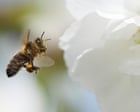
The concrete rupture comes from research records extending back to 1921, which show that more European wild bee species are declining than increasing in every part of the continent except the limited exception identified in the report. Most wild bees and roughly half of hover fly species have fallen over the past century. The scale of the finding changes pollination from a specialist concern into an agricultural and ecological fact affecting crop yields, wild plant reproduction and the maintenance of entire habitats.
The underlying tension is that biodiversity losses rarely appear as a single moment of collapse. Land-use change, pesticide exposure, disease, climate stress and the simplification of landscapes accumulate across generations, while public measures often focus on individual species or brief surveys. Long-term datasets expose the danger of judging ecological health from a narrow present window. Yet the loss of pollinators is also uneven, and national patterns do not necessarily predict the condition of particular habitats or farming systems.
The downstream consequences will be borne by farmers who depend on insect pollination, rural communities that manage less productive land and conservation programmes that are trying to restore habitat without sufficient insect abundance. The findings also weaken the assumption that agriculture can absorb every environmental cost through technical adjustment. If bee and hover fly decline continues, pollination services may become less reliable, restoration will take longer and food systems will face sharper pressure. The study's most serious implication is institutional: governments must treat long-term ecological decline as a present economic risk rather than a distant environmental concern.
Comments 0