Fast‑Track Election Process Proposed for Small Housing Societies in Pune
The Maharashtra government is considering a two‑week election schedule for residential societies with fewer than fifty members, aiming to reduce procedural delays. The initiative targets a segment of urban housing that often faces governance bottlenecks. Stakeholders anticipate that a streamlined timetable will enhance participation while raising concerns about adequate notice and candidate vetting.
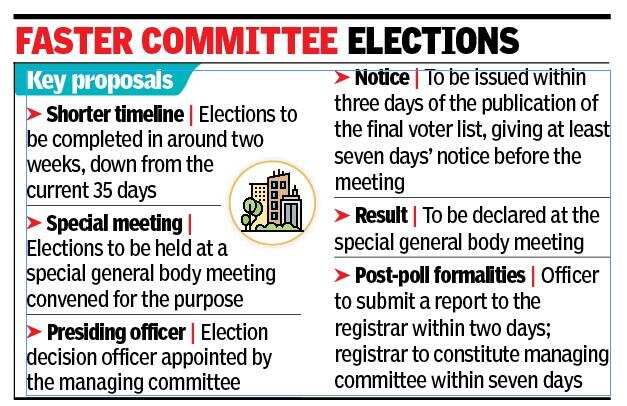
A draft ordinance introduced by the state administration seeks to condense the electoral timeline for housing societies comprising under fifty households, cutting the usual months‑long process to a fortnight. The proposal outlines a simplified nomination and voting procedure, leveraging digital platforms to submit forms and tally votes. Proponents argue that the current system imposes unnecessary administrative burdens on small communities, delaying essential decisions on maintenance, security and financial planning.
The measure has sparked debate among resident welfare associations, legal experts and municipal officials. Critics warn that a rushed schedule may compromise the thoroughness of candidate scrutiny, potentially allowing individuals with conflicts of interest to assume leadership roles. Additionally, there are apprehensions about the digital divide, as some elderly residents may lack access to online voting tools, thereby marginalising their voice in the process.
If enacted, the fast‑track framework could serve as a model for other Indian states grappling with similar governance challenges in micro‑societies. Successful implementation may lead to quicker resolution of maintenance disputes, improved fund allocation for infrastructure upgrades, and a reduction in litigation arising from contested elections. However, any missteps could fuel legal challenges, prompting courts to intervene and possibly reshape the legislative approach to housing society governance.
Comments 0