Govardhan Puja Transforms the Sacred of Braj
The annual Govardhan pilgrimage in Mathura‑Vrindavan attracted thousands of devotees who performed the traditional annakoot and parikrama rituals. Observers noted subtle changes in the region’s cultural fabric as modern amenities intersect with age‑old customs.
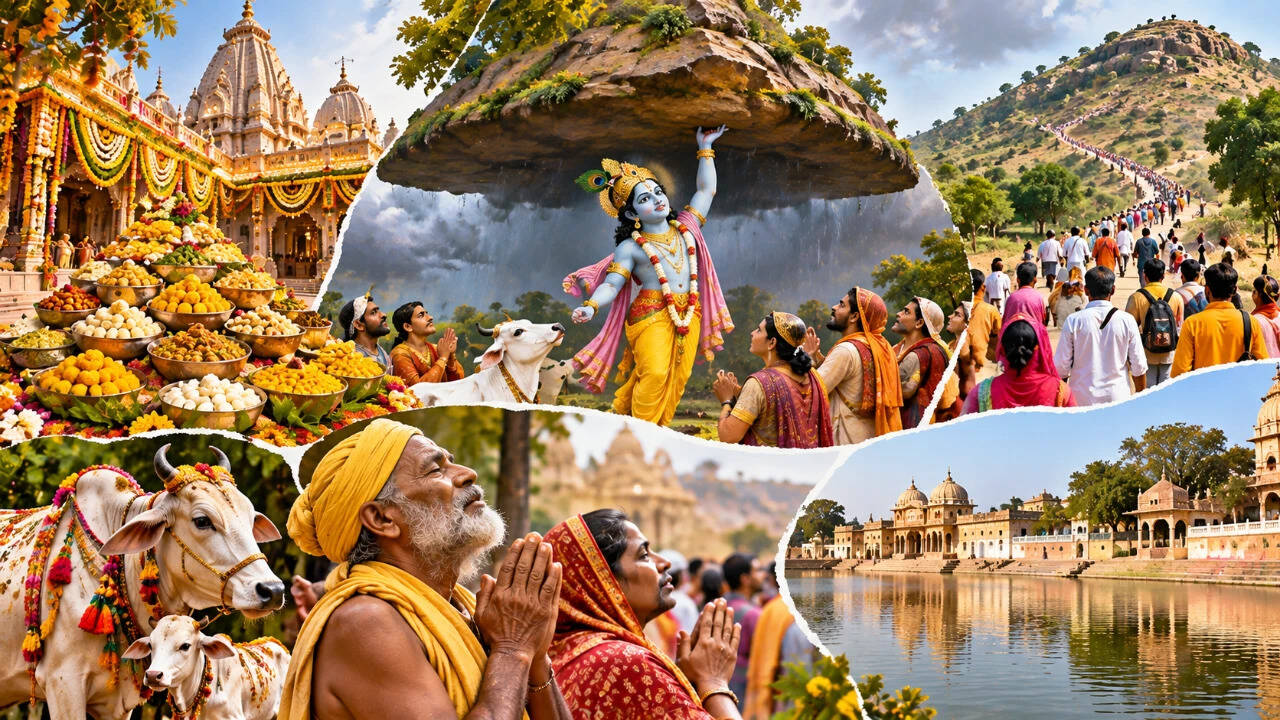
Each year, the hills of Govardhan become the focal point of a celebration that commemorates the mythic lifting of the mountain by Lord Krishna to protect villagers from torrential rain. Pilgrims ascend the slopes, offering food, flowers, and prayers, while vendors line the pathways with sweets and devotional paraphernalia. This year, the influx of visitors was accompanied by newly installed sanitation facilities, digital ticketing systems, and enhanced security measures, reflecting an effort to manage crowds while preserving the sanctity of the rites.
The underlying tension lies in balancing heritage preservation with the pressures of commercialization. Local authorities, eager to boost tourism revenue, have introduced infrastructure projects that some scholars fear may erode the authenticity of the rituals. Simultaneously, community leaders argue that improved amenities are essential for the safety and comfort of pilgrims, many of whom travel from distant parts of the country. The dialogue between tradition‑keepers and development planners underscores a broader debate about the future of sacred sites in a rapidly modernising India.
The downstream impact is already evident. The upgraded facilities have reduced health hazards associated with large gatherings, while the digital ticketing platform has streamlined pilgrim flow, decreasing congestion on the hill’s narrow pathways. Economically, nearby villages have reported increased earnings from hospitality services, suggesting a modest uplift in local livelihoods. However, cultural custodians caution that the subtle shift toward a more regulated experience could gradually dilute the organic spontaneity that has defined Govardhan Puja for centuries.
Comments 0