India and New Zealand Seal Trade Pact Aiming for Seven Billion Dollars
The Free Trade Agreement between India and New Zealand enters into force on October 20, establishing a formal framework to double bilateral commerce to seven billion dollars by 2030. This accord signals a strategic pivot toward deepening economic ties with the Pacific Rim, reducing reliance on traditional Western markets.
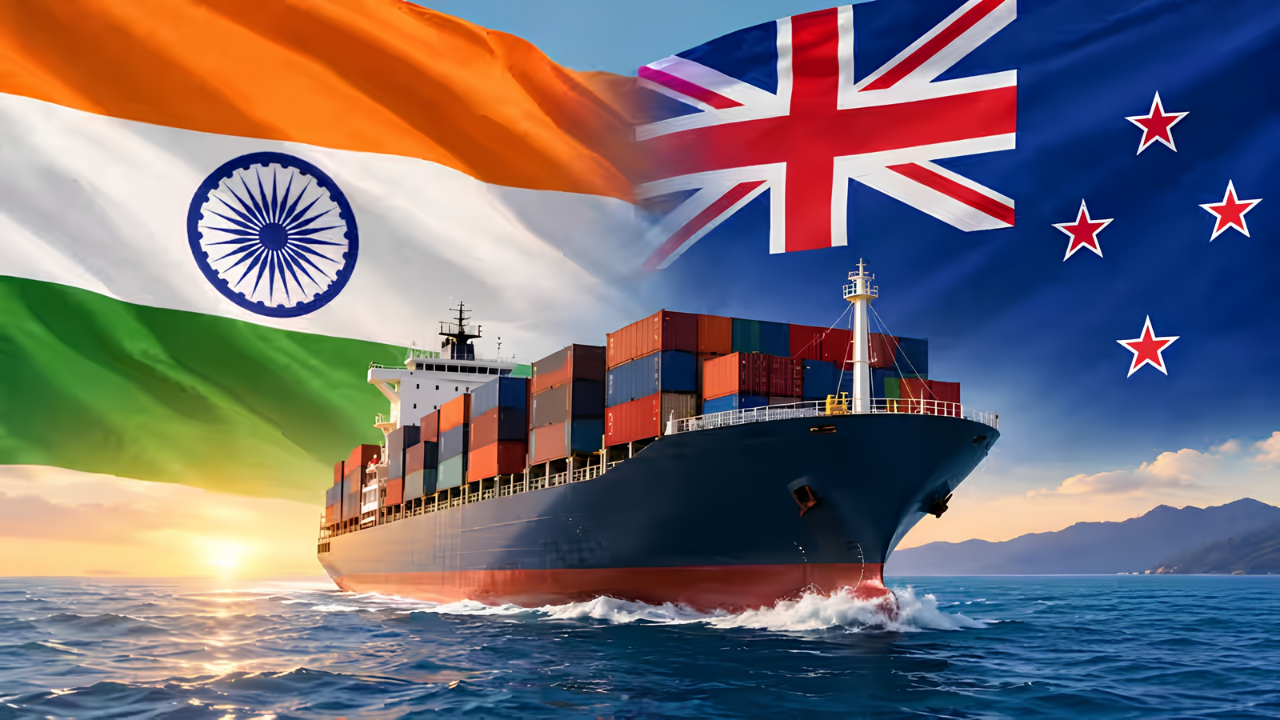
The formal activation of the India New Zealand Free Trade Agreement on October 20 marks a definitive shift in the subcontinent's external economic architecture. By targeting a doubling of trade volume to seven billion dollars within four years, the pact moves beyond symbolic diplomatic gestures to establish concrete mechanisms for market access. This agreement opens new avenues for Indian exports in services, pharmaceuticals, and agricultural products while granting New Zealand greater entry into the Indian consumer market, a demographic of over a billion people that has long remained a protected fortress for local industries.
The underlying tension in this negotiation stems from the broader geopolitical realignment where India seeks to diversify its trade partners away from the United States and the European Union. Institutional friction was resolved through lengthy negotiations that balanced the protection of sensitive sectors like dairy and agriculture against the imperative of opening up service sectors where India holds a comparative advantage. The agreement reflects a calculated risk by New Zealand to embed itself in the Indian growth story, while India leverages the deal to secure a stable foothold in the Pacific economic sphere, countering the influence of other major powers in the region.
The downstream consequences will be felt by exporters and importers who must now navigate new tariff schedules and rules of origin. Small and medium enterprises in India may find new opportunities in niche markets for handicrafts and IT services, yet they face the challenge of meeting stringent quality and compliance standards required by their New Zealand counterparts. The tangible outcome is a more integrated supply chain that reduces transaction costs and fosters a more resilient trade network, capable of withstanding the volatility that has characterized global commerce in recent years.
Comments 0