Judicial Discourse in Patna Examines Creamy Layer Exclusions for Scheduled Castes
Chanakya National Law University hosted a high-level academic discussion regarding the application of the creamy layer principle to Scheduled Castes and Scheduled Tribes. The discourse brings renewed legal and political attention to internal stratification and equitable resource distribution within reserved categories.
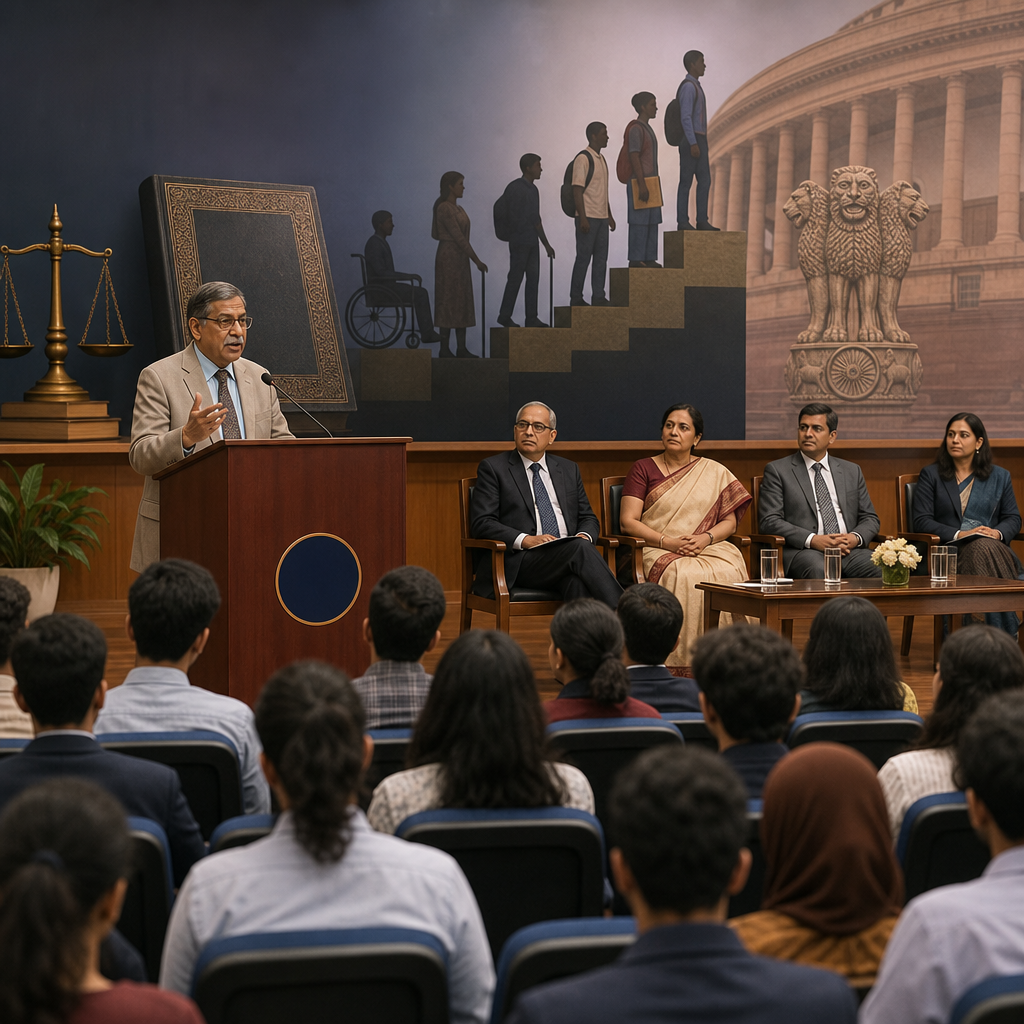
An academic seminar at Chanakya National Law University in Patna has brought the contentious debate surrounding the creamy layer principle within historically disadvantaged groups back into the public sphere. Legal scholars and constitutional experts debated the merits of excluding economically advanced strata from affirmative action benefits originally designed for marginalized populations. The discourse highlights an intensifying judicial and sociological inquiry into how reservation policies should evolve to address class disparities within protected communities. This intellectual exercise taps into a volatile political fault line across Bihar and the wider Gangetic plains, where caste identities form the bedrock of electoral mobilization. While proponents argue that economic filtering ensures benefits reach the most destitute individuals at the base of the social pyramid, opponents view any dilution of reservation criteria as an attack on systemic social justice. The friction exposes deep philosophical divisions between individual economic mobility and collective historical reparations under constitutional frameworks. The tangible outcome of this ongoing intellectual and judicial pressure is an eventual re-evaluation of statutory reservation parameters at higher legislative levels. As political parties calculate the electoral fallout of modifying quotas, marginalized communities remain intensely polarized over the redistribution of state patronage. The debate lays the intellectual groundwork for future legal challenges in higher courts regarding the architecture of social equity in India.
Comments 0