Karnataka High Court Quashes FIRs Against Media Figures Over Turkey Office Allegations
The Karnataka High Court has struck down criminal complaints against Amit Malviya and Arnab Goswami, ruling that their claims regarding a Congress party office in Turkey did not warrant criminal prosecution. This decision marks a significant legal victory for media freedom and sets a precedent for the handling of political allegations in the judicial sphere.
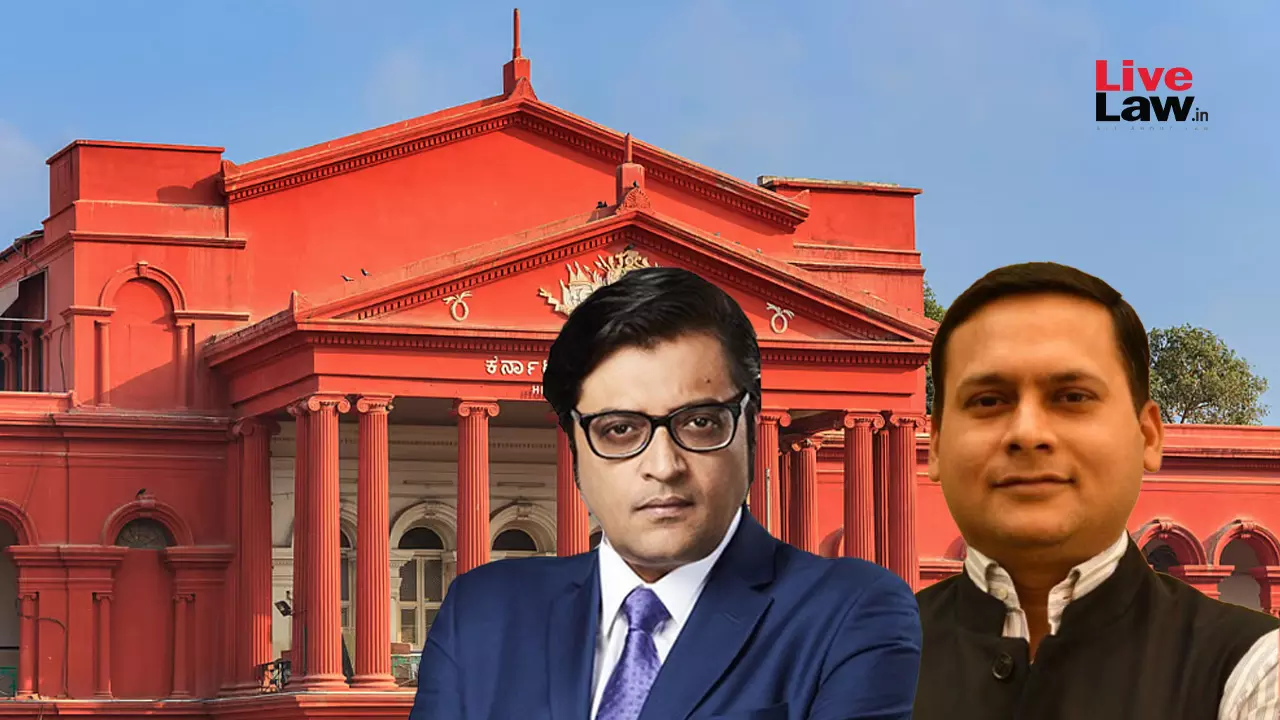
The Karnataka High Court has delivered a decisive ruling that quashes the FIRs registered against journalist Arnab Goswami and political commentator Amit Malviya. The case stemmed from their public claims regarding the existence of a Congress party office in Istanbul, Turkey. The court's intervention serves as a clear demarcation between political discourse and criminal liability, signaling that not every public accusation, however contentious, should be met with the full weight of the criminal justice system. This move effectively shields the individuals from immediate legal jeopardy and allows the debate to return to the political arena rather than the courtroom.
The underlying tension in this case reflects the broader friction between political parties and the media in the current Indian political . The Congress party had sought to use the legal system to challenge the credibility of its critics, a strategy that has become increasingly common in recent years. The court's decision highlights the institutional friction that arises when political grievances are translated into criminal complaints. It underscores the judiciary's role in preventing the misuse of legal mechanisms to silence dissent or political opposition, a concern that has grown louder as the boundaries between politics and law blur.
The tangible outcome of this ruling is a shift in the power dynamics between political entities and the press. For the media, it is a validation of their right to report and comment on political matters, even when those comments are disputed. For the political parties, it is a reminder that the courts are not a tool for political retribution. The downstream effect will likely be a more cautious approach by political parties in filing criminal complaints against media figures, as the legal risks of such actions become more apparent. This ruling will be closely watched by legal experts and political analysts as a benchmark for future cases involving media and politics.
Comments 0