Kolkata Hospitals Struggle to Absorb Ayushman Bharat Costs, Seek Tier Upgrade
Hospitals in Kolkata are urging the government to upgrade the city's tier status under the Ayushman Bharat scheme, citing an inability to manage the current reimbursement rates. This move reflects the growing financial strain on public healthcare providers tasked with delivering subsidized care to a large population.
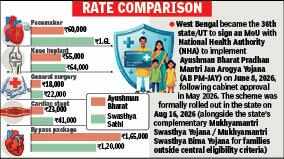
The concrete rupture in Kolkata's healthcare delivery is the formal request by hospitals to upgrade the city's tier status under the Ayushman Bharat scheme. The current reimbursement rates, determined by the existing tier classification, are insufficient to cover the actual costs of treatment, leading to financial losses for the institutions. This is not a minor accounting issue but a structural flaw in the design of the national health insurance scheme. The hospitals are arguing that the cost of living and medical inputs in Kolkata, a major metropolitan area, is higher than in the tier currently assigned to them. The request is a direct appeal for financial sustainability.
The underlying tension is between the government's goal of providing affordable healthcare and the economic reality of running a hospital. The institutional friction is evident in the gap between the fixed reimbursement rates and the variable costs of medical care. The hospitals are caught in a bind where they must provide high quality care to a large number of beneficiaries while operating on thin margins. The government's reluctance to upgrade the tier may be due to budgetary constraints or a desire to maintain uniformity across regions. However, this approach ignores the local economic conditions and the specific challenges faced by hospitals in different cities.
The downstream casualties are the patients who rely on these hospitals for affordable care. If the hospitals are unable to sustain their operations, they may reduce services or increase out of pocket costs for patients, defeating the purpose of the scheme. The tangible outcome of this dispute will be a renegotiation of the reimbursement rates, which could set a precedent for other cities. The incident highlights the need for a more flexible and localized approach to healthcare financing, one that takes into account the specific economic and demographic conditions of each region.
Comments 0