Kolkata's Chorbagan Tragedy: A Failure of Crowd Control and State Accountability
Nineteen lives were lost in a deadly stampede at the Chorbagan pandal, prompting the West Bengal government to impose three-day prohibitory orders in the Bowbazar area. Video evidence reveals that crowds had breached barricades and clashed with police the day prior, exposing a severe breakdown in administrative foresight and public safety protocols.
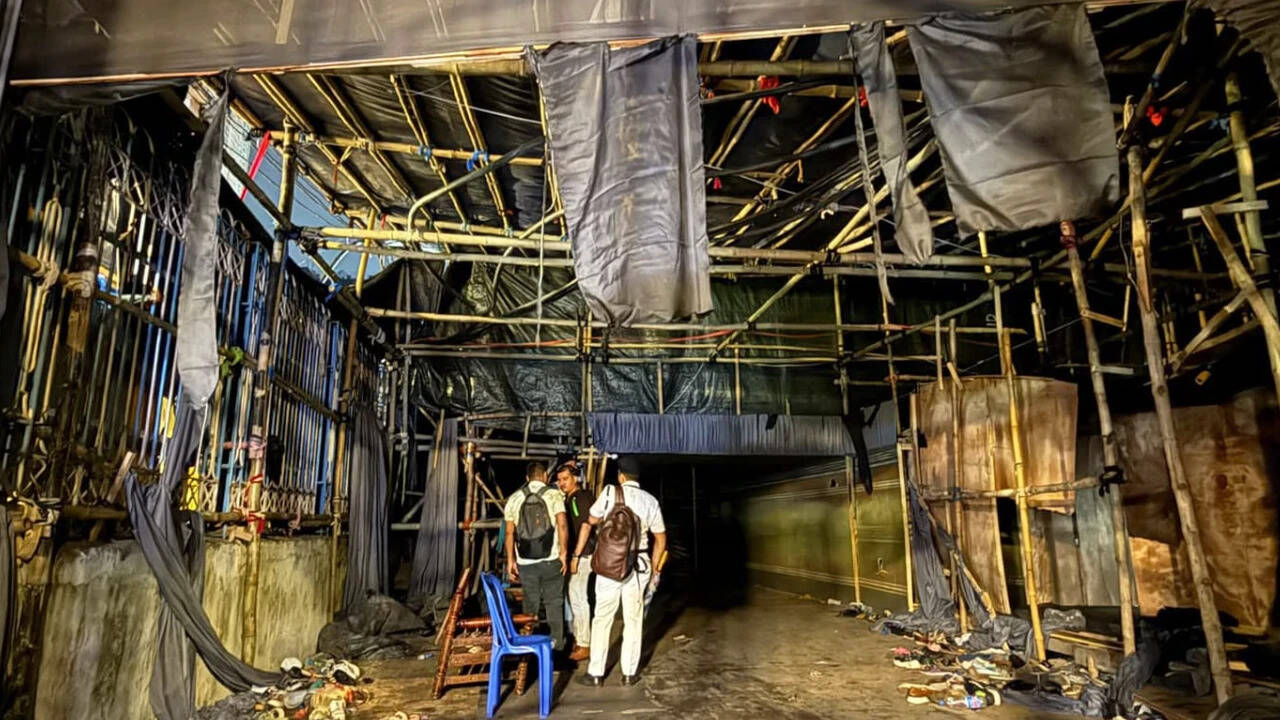
The rupture in Kolkata's public order was not a sudden anomaly but the culmination of visible, ignored warnings. Surveillance footage from the day preceding the tragedy captures a chaotic scene at the Chorbagan pandal, where large crowds forcibly breached police barricades and engaged in physical tussles with law enforcement. This prior escalation served as a clear indicator of the fragility of the crowd management strategy, yet the authorities failed to implement the necessary reinforcements or structural changes to the venue layout. The subsequent stampede, which claimed nineteen lives, stands as a stark to the consequences of bureaucratic complacency in the face of imminent danger.
The underlying tension lies in the institutional friction between the state's desire to maintain a festive atmosphere and its legal obligation to ensure public safety. The decision to impose three-day prohibitory orders in Bowbazar after the event reflects a reactive posture rather than a proactive governance model. The failure to anticipate the scale of the gathering or to enforce strict entry limits reveals a systemic gap in the coordination between local police, municipal authorities, and event organizers. This incident underscores a recurring pattern in Indian urban centers, where the sheer volume of cultural participation outpaces the capacity of administrative machinery to manage it effectively.
The downstream casualties extend beyond the immediate loss of life to include a profound erosion of public trust in state institutions. Families of the victims are left to navigate a legal and administrative maze while the government scrambles to contain the political fallout. The imposition of prohibitory orders, while intended to restore order, may further alienate citizens who view the state as an obstacle to their cultural expression rather than a protector of their safety. This tragedy will likely trigger a comprehensive review of crowd management policies across West Bengal, but the human cost remains a permanent stain on the record of the administration.
Comments 0