Ladakh’s Judicial Bench: A Strategic Move for Regional Autonomy
Chief Justice Surya Kant has inaugurated the High Court bench in Ladakh, promising dedicated Supreme Court listing days for the region. This judicial expansion aims to address the unique legal and administrative challenges of the Union Territory, reinforcing its distinct identity within the Indian federal structure.
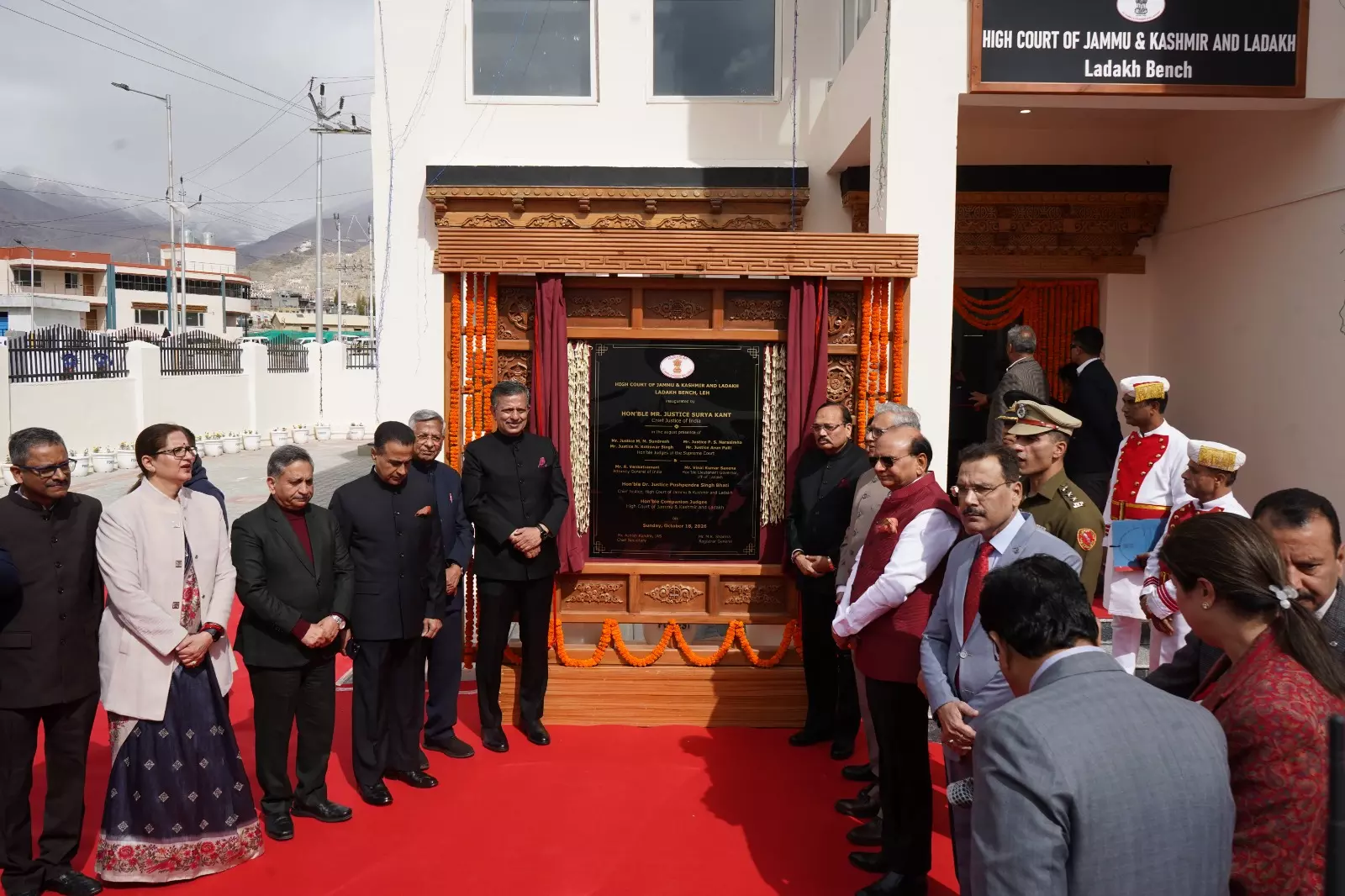
The concrete rupture is the formal establishment of a High Court bench in Ladakh, a move that signifies a significant shift in the region’s judicial infrastructure. Chief Justice Surya Kant’s inauguration of the bench and his assurance that all matters from the region will be listed on a single day in the Supreme Court mark a tangible step towards decentralizing justice. This decision is not merely administrative but carries profound political and social implications, acknowledging Ladakh’s unique status and the need for a more accessible judicial system. The move is a direct response to the long-standing demands of the local population for greater autonomy and representation in the legal system.
The underlying tension is the complex relationship between the central government and the Union Territory of Ladakh, which has been a subject of political debate since its reorganization. The establishment of the High Court bench is a strategic move to integrate Ladakh more fully into the Indian legal framework while addressing its specific needs. The institutional friction is evident in the previous lack of a dedicated judicial presence in the region, which forced residents to travel long distances for legal matters. This new arrangement aims to reduce this burden and enhance the efficiency of the judicial process, thereby strengthening the rule of law in the region.
The downstream consequences of this judicial expansion are likely to be a more robust legal framework in Ladakh, which could influence future policy decisions and administrative actions. The tangible outcome is a more accessible and efficient judicial system for the residents of Ladakh, which could lead to a greater sense of belonging and trust in the state. The casualties of the previous system, characterized by inaccessibility and delay, are now being addressed through this new structure. The long-term impact will be a more stable and integrated Ladakh, with a stronger legal foundation that can support its economic and social development.
Comments 0