Low Electoral Turnout Persists in Panjab University Senate Elections Amid Extended Agitation
Months of sustained academic and political agitation culminate in a remarkably subdued voter turnout for the Panjab University senate elections. The low participation rate underscores a widening apathy among the graduate electorate despite high-pitched political campaigns.
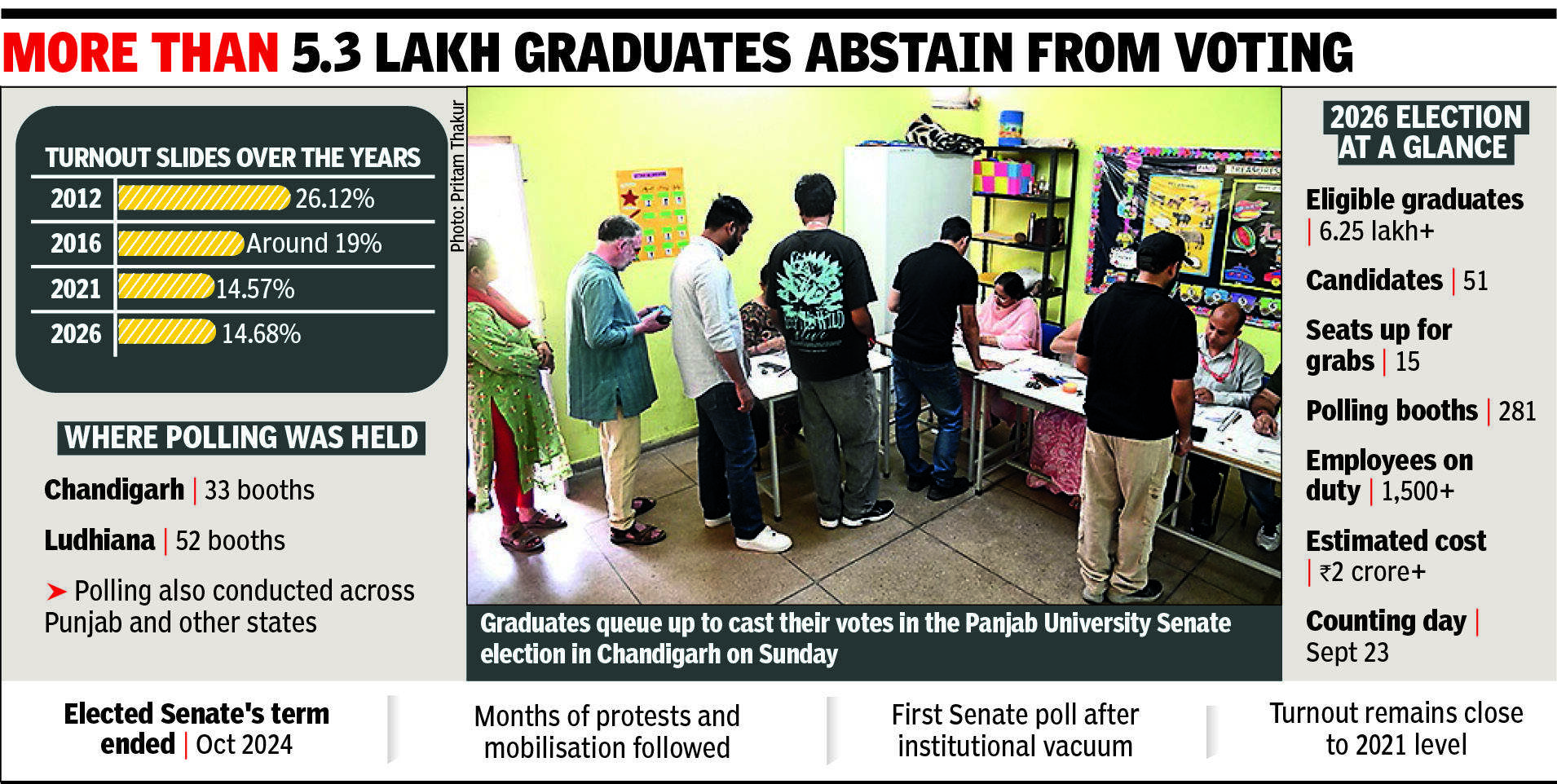
The democratic exercise underpinning the governance of Panjab University concluded with a starkly underwhelming turnout, hovering near fifteen percent. Despite months of vociferous campaigning, student rallies, and ideological tussles between rival political factions, the broader graduate constituency largely abstained from casting ballots. This disconnect highlighted a profound weariness among alumni and affiliated academics regarding the efficacy of university senate politics in shaping tangible institutional policies. At the heart of this low engagement lies a growing cynicism concerning the politicization of academic governing bodies. While organized teacher and principal constituencies maintained relatively high participation rates to safeguard professional interests, the general graduate category demonstrated near-total detachment. This disparity reveals an institutional structure captured by entrenched interest groups rather than mobilized by visionary academic discourse, leaving the university leadership insulated from broader democratic accountability. The resulting composition of the senate ensures continuity for established political lobbies while marginalizing independent reform voices. Consequently, policy stagnation is set to persist within the university's highest decision-making organs. Downstream, this democratic fatigue threatens to further alienate the student and alumni body from critical administrative decisions regarding curriculum modernization and financial autonomy.
Comments 0