Madras High Court Clears Path for RSS Route March
The Madras High Court has directed the state government to permit a route march by the Rashtriya Swayamsevak Sangh, ruling that future denials of permission are not permissible. This judicial intervention resolves a long-standing dispute over public assembly and political expression in the state.
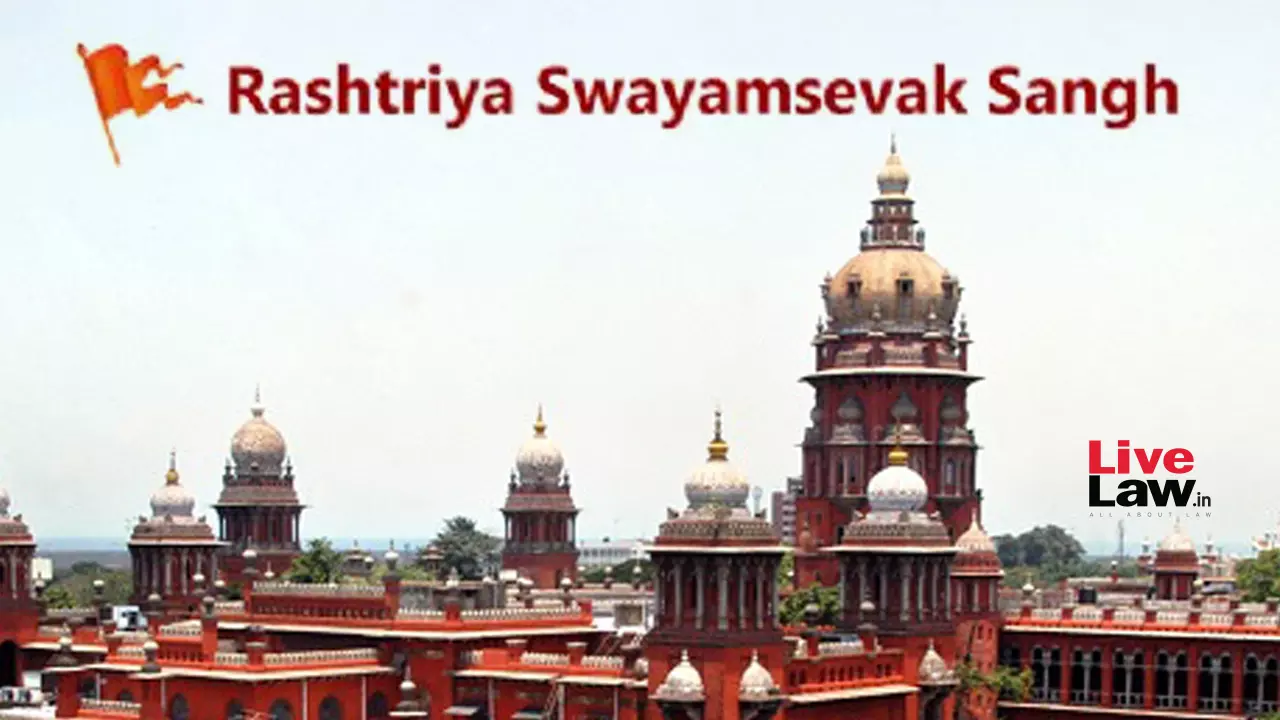
The concrete rupture is a judicial order that overrides executive discretion. The Madras High Court has stepped in to ensure that the RSS can conduct its route march, effectively stripping the state government of the power to deny permission. This is a significant shift in the balance of power between the judiciary and the executive in matters of public order. The immediate shockwave is a validation of the RSS's right to public assembly, which may embolden other political and social groups to challenge similar restrictions. The court's ruling sets a legal precedent that could reshape how future protests and marches are handled in the state.
The underlying tension is the conflict between public order concerns and the fundamental right to assembly. The state government likely denied permission citing potential disruption or security risks, a common justification in Indian politics. The court's intervention suggests that these justifications are not sufficient to override the constitutional right to peaceful assembly. This institutional friction highlights the ongoing struggle between political parties and civil society organizations for control over public space. The ruling forces the state to find a middle ground, where it must manage the event without suppressing it, a task that requires careful planning and policing.
The downstream casualties are the political opponents who may view this as a bias in favor of the RSS. The tangible outcome is a more active public presence of the RSS in Tamil Nadu, a state where its influence has historically been limited. The 12-month structural consequence is a potential increase in political mobilization and public rallies across India, as other courts may follow this precedent. This could lead to a more but also more contentious public sphere, where political expression is more visible and less easily curtailed by state authorities. The result is a strengthening of civil society's role in the democratic process, even as it intensifies political polarization.
Comments 0