Maharashtra's Political Fracture: The INDIA Bloc Accusation
Maharashtra Chief Minister Devendra Fadnavis and Deputy CM Eknath Shinde have accused the opposition INDIA bloc of seeking a China-like regime, escalating tensions ahead of upcoming elections. This rhetoric marks a significant hardening of political discourse in the state, framing the opposition as a threat to democratic norms.
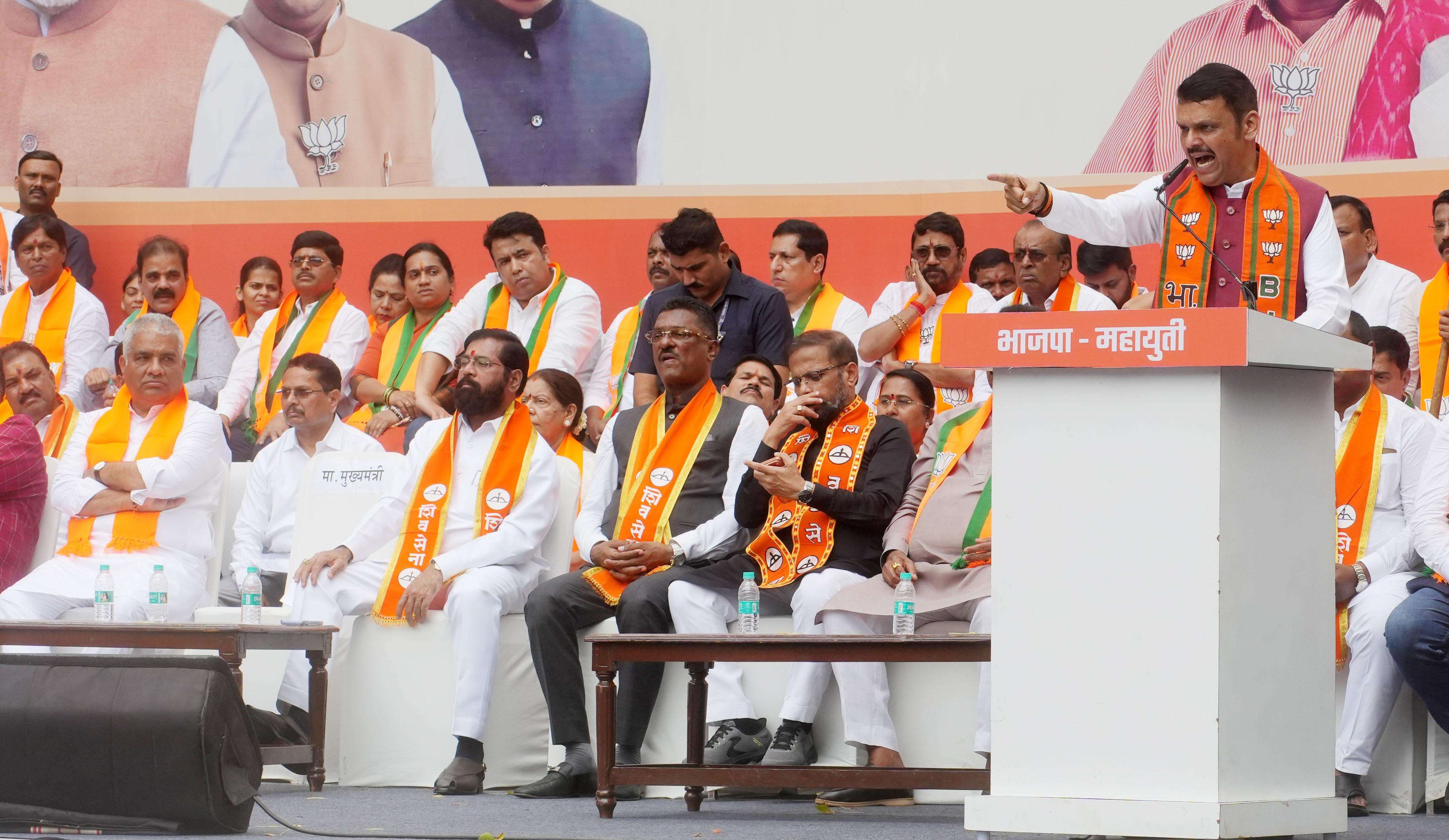
In a stark departure from conventional political discourse, the ruling coalition in Maharashtra has accused the opposition INDIA bloc of aspiring to establish a regime akin to China. This concrete rupture in political language signals a deepening polarization, where the opposition is no longer viewed as a legitimate alternative but as an existential threat to the state's democratic fabric. The immediate shockwave is a chilling effect on political debate, with dissenting voices potentially being marginalized as agents of foreign influence. The accusation, made by the Chief Minister and Deputy CM, sets a tone that could influence voter sentiment in the coming months.
The underlying tension reflects a broader institutional friction between the ruling party and the opposition, where the boundaries of acceptable political rhetoric are being tested. The ruling coalition's strategy appears to be one of delegitimization, aiming to strip the opposition of its moral authority by associating it with authoritarianism. This approach is not without risk, as it may alienate moderate voters who are wary of such extreme characterizations. The institutional friction is further compounded by the fact that the opposition has its own grievances regarding the conduct of the ruling government, creating a cycle of mutual accusation that undermines public trust in the political process.
The downstream casualties of this political hardening are the erosion of democratic norms and the potential for increased social unrest. The tangible outcome is a political environment where dialogue is replaced by confrontation, making it difficult to reach consensus on critical issues such as economic policy and social welfare. Over the next year, this trend may lead to a more fragmented political , with smaller parties and independent candidates gaining traction as voters seek alternatives to the polarized major parties. The long-term consequence is a weakening of the democratic institutions that have underpinned Maharashtra's political stability for decades.
Comments 0