Panjab University library remains out of reach for wheelchair users
Panjab University's main library remains inaccessible to students and staff using wheelchairs due to a lack of ramps and elevators. This exclusion violates basic accessibility standards and hinders the academic progress of disabled individuals in one of Punjab's premier institutions.
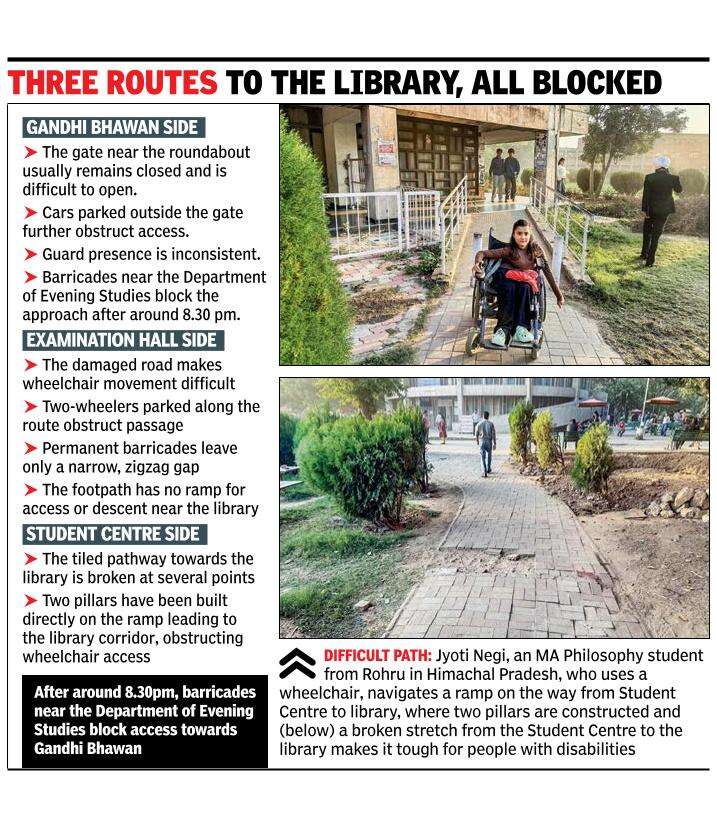
Panjab University, a landmark institution in Chandigarh, continues to face criticism for its failure to provide basic accessibility features in its central library. Students and faculty members who rely on wheelchairs are unable to enter the building because the facility lacks ramps, elevators, or accessible entrances. The library, which houses extensive academic resources, is effectively closed to a significant portion of the university community, creating a barrier to education that contradicts the institution's mission of inclusive learning.
The absence of these structural modifications means that disabled students must rely on others to carry books or seek alternative study spaces, which are often less equipped or inconvenient. This situation highlights a broader issue in many Indian educational institutions where physical infrastructure has not kept pace with legal mandates for disability access. The lack of accessibility not only isolates these individuals but also limits their ability to participate fully in research, examinations, and daily academic activities.
For readers in India, this story underscores the ongoing gap between policy and implementation in public institutions. While laws such as the Rights of Persons with Disabilities Act mandate accessible infrastructure, enforcement remains inconsistent. The case of Panjab University serves as a reminder that true inclusion requires practical changes to physical spaces, ensuring that education is available to all regardless of physical ability.
Comments 0