PM Modi's Bastar Visit Marks the End of an Era in Internal Security
Prime Minister Narendra Modi's decision to celebrate Diwali with security personnel in Chhattisgarh's Bastar region signals the official closure of the Naxalite insurgency. The move redefines the state's relationship with the forest belt, shifting from military containment to developmental integration.
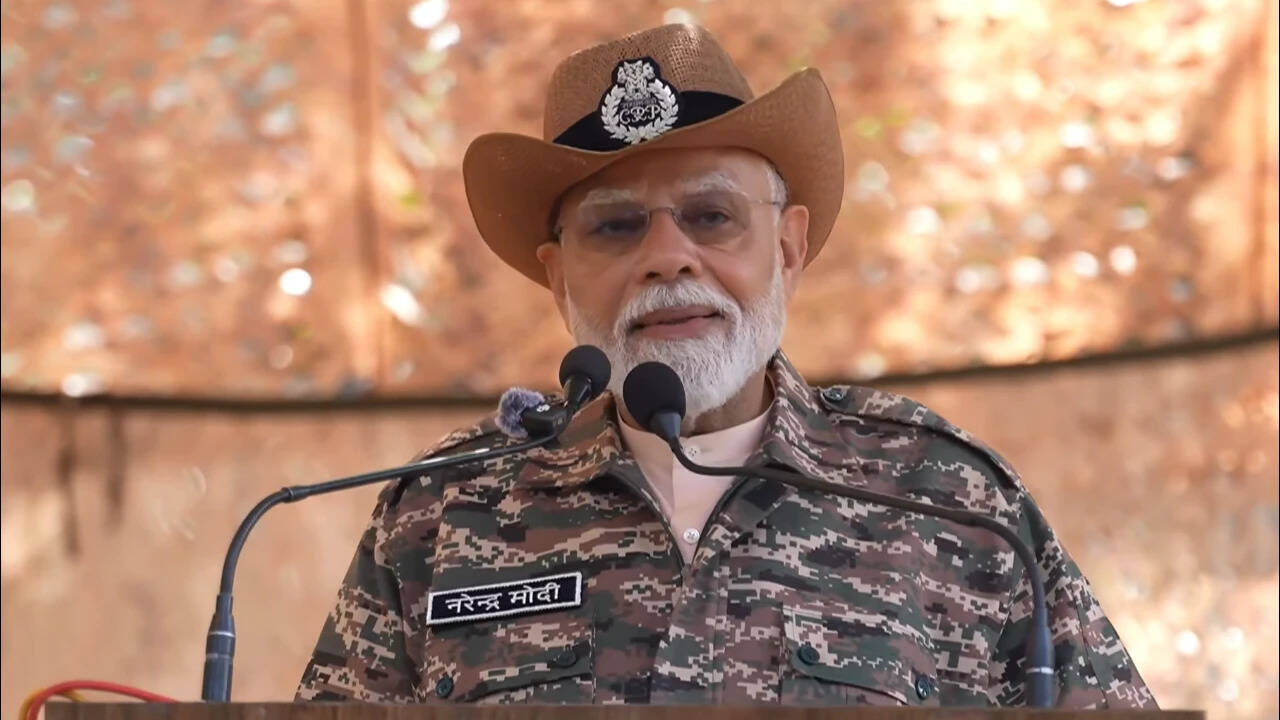
The concrete rupture is the symbolic and operational shift in how the central government engages with India's most sensitive internal security zones. By choosing Bastar for a high-profile festive gathering, the Prime Minister has declared that the state's monopoly on violence in the region has been reasserted. This is not a ceremonial gesture but a strategic signal that the government views the Naxalite threat as contained, if not entirely extinguished. The presence of security personnel as guests, rather than as a defensive perimeter, inverts the traditional dynamic of the area, suggesting a transition from a war footing to a governance footing.
The underlying tension lies in the historical trauma of the region and the complex interplay between tribal rights, resource extraction, and state authority. For decades, the forest belt has been a theatre of conflict where the state's presence was synonymous with coercion. The current institutional friction involves the challenge of converting military success into political legitimacy. The government must now prove that the absence of insurgency does not equate to the absence of grievance. The friction between the central narrative of victory and the local reality of land rights and economic exclusion remains a volatile mix that could reignite if not managed with precision.
The downstream outcome is a reconfiguration of investment and infrastructure in the central Indian belt. With the security narrative shifting to stability, the state is likely to accelerate mining and infrastructure projects in the region, which were previously stalled due to security risks. However, this brings with it the risk of new social conflicts over displacement and environmental degradation. The tangible casualty is the old model of engagement, where the state operated in the shadows; the new model demands transparency and development, but it also exposes the government to the scrutiny of a population that has long felt marginalized. The structural consequence is a test of whether the state can deliver on the promise of development without reigniting the very grievances that fueled the insurgency.
Comments 0