Samajwadi Party Realigns Symbolic Politics to Capture Fragmented Backward Class Votes in Uttar Pradesh
Akhilesh Yadav has deployed a calibrated shift in visual and political messaging, adopting iconic blue apparel alongside his traditional red cap to consolidate backward classes and marginalized voters. The deliberate strategic maneuver challenges existing regional voting blocs and forces opposing political coalitions to recalibrate their electoral math ahead of state contests.
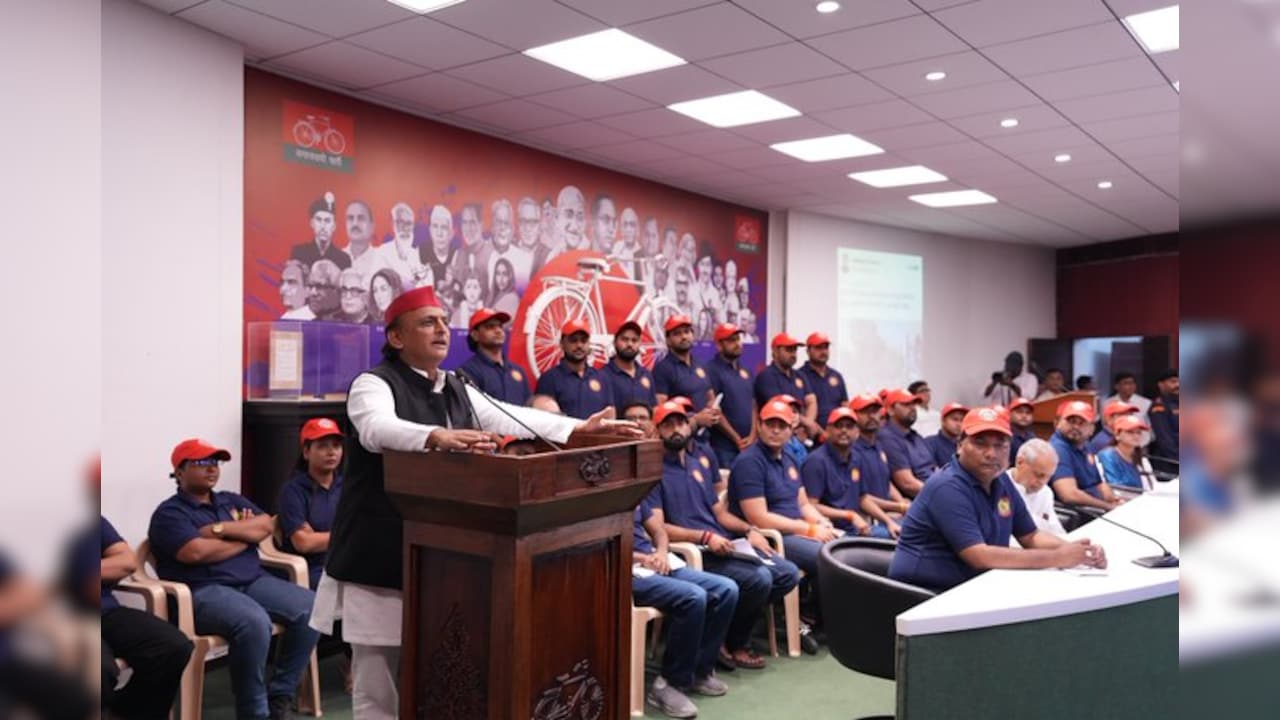
Political posturing in Uttar Pradesh underwent a stark visual evolution when Samajwadi Party leader Akhilesh Yadav publicly paired his trademark red cap with a bright blue shirt, sending an unmistakable signal across the state's intricate political terrain. The deliberate integration of blue, historically associated with Dalit political identity, represents a calculated attempt to expand the party's foundational coalition beyond its historic social base. This physical synthesis of symbols marks an aggressive effort to capture disenfranchised voters who feel alienated by dominant political parties. The strategic evolution reflects acute structural friction within the opposition ranks. By championing a unified identity strategy that merges backward classes, minorities, and marginalized communities, the leadership seeks to break through longstanding social fault lines that have historically fragmented opposition ballots. The initiative challenges rival parties that have relied on deep identity divisions, prompting intense political friction as competitors scramble to preserve their traditional voter loyalty networks. The primary casualties of this strategic shift are established regional party hierarchies that previously held a monopoly over marginalized voter demographics. Smaller political formations risk complete absorption into broader opposition fronts, while the ruling coalition faces the prospect of losing key electoral sub-castes that had backed recent legislative victories. As state elections approach, this symbolic consolidation threatens to redraw the electoral map across India's most populous state.
Comments 0