Supreme Court Orders Physical Appearance for Sanjay Raut in Contempt Case Over CJI Comments
The Supreme Court has directed Sanjay Raut to appear physically in a contempt case arising from his comments against the Chief Justice of India, while allowing Nikhil Wagle to appear virtually. This decision highlights the court’s firm stance on maintaining the dignity of the judiciary and the serious consequences for those who challenge its authority.
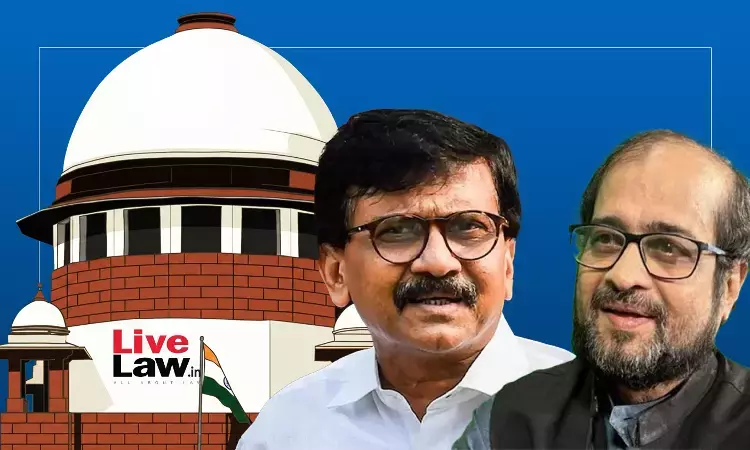
The concrete outcome of the Supreme Court’s recent order is the directive for Sanjay Raut to appear physically in a contempt case related to his comments against the Chief Justice of India. This decision is a clear signal of the court’s commitment to upholding the dignity and authority of the judiciary, particularly in cases where the Chief Justice is targeted. The order also allows Nikhil Wagle to appear virtually, indicating a nuanced approach to the logistics of the proceedings. The case itself is a significant test of the boundaries of free speech and the limits of criticism of the judiciary in India.
The underlying tension in this case is the balance between the right to free speech and the need to protect the integrity of the judicial system. The comments made by Sanjay Raut have been viewed as a direct challenge to the authority of the Chief Justice, which the court sees as a threat to the institution’s credibility. The institutional friction is evident in the debate over the appropriate response to such comments, with some arguing for a more lenient approach and others advocating for strict enforcement of contempt laws. The court’s decision reflects a preference for the latter, emphasizing the importance of maintaining respect for the judiciary.
The downstream consequences of this case could be significant for the broader discourse on judicial criticism in India. The tangible outcome is a potential chilling effect on public debate, as individuals and organizations may be more cautious in their criticism of the judiciary to avoid the risk of contempt proceedings. The case also highlights the power of the Supreme Court to shape the boundaries of free speech in the context of judicial matters. The decision underscores the court’s role as a guardian of its own authority and the serious implications for those who challenge it.
Comments 0