The Fracture in the Franchise: Uddhav Thackeray Calls for Regime Change
The former chief minister of Maharashtra has declared that the democratic framework is being systematically dismantled, demanding a fundamental shift in the governing structure. This radical pronouncement signals a deepening crisis of legitimacy within the state's political establishment and sets the stage for intensified electoral confrontation.
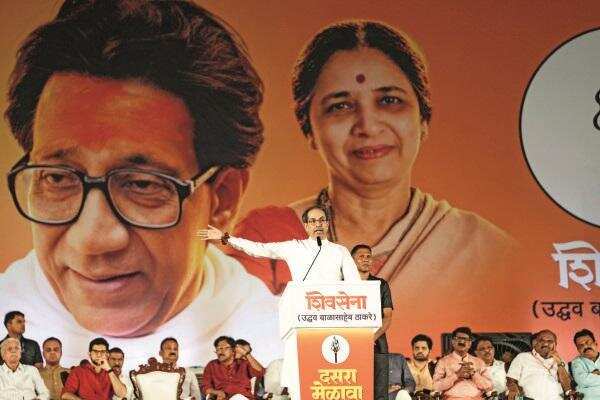
Uddhav Thackeray, the architect of the Shiv Sena's political identity, has moved beyond standard opposition rhetoric to declare that democracy itself is being undermined. His call for regime change represents a stark departure from conventional parliamentary discourse, framing the current administration not merely as a rival party but as an entity operating outside the bounds of democratic norms. This statement lands in a state where political loyalty is often forged through caste, community, and personal allegiance, making such a declaration a potent mobilizing tool for his base.
The underlying tension stems from a prolonged period of institutional friction between the state government and the central authority. Thackeray’s remarks reflect a growing perception among opposition leaders that legal and administrative levers are being used to suppress dissent and consolidate power. By invoking the need for a complete overhaul, he is attempting to reframe the political narrative from one of policy disagreement to one of existential struggle, thereby justifying more aggressive forms of protest and political mobilization.
The immediate consequence of this rhetoric is the potential for heightened political volatility in Maharashtra. As the state approaches critical electoral cycles, such declarations can polarize the electorate and intensify the tone of political discourse. For the ruling coalition, this presents a challenge in maintaining public order while managing a opposition that is increasingly willing to challenge the foundational principles of the state. The downstream impact will likely be seen in the form of stricter security protocols and a more confrontational political environment.
Comments 0