The Lack of a Shared Lexicon Undermines Responsible AI‑Military Integration
Fragmented terminology across services and agencies hampers coherent development of military artificial intelligence. The deficiency threatens coordinated defence operations and accountability mechanisms.
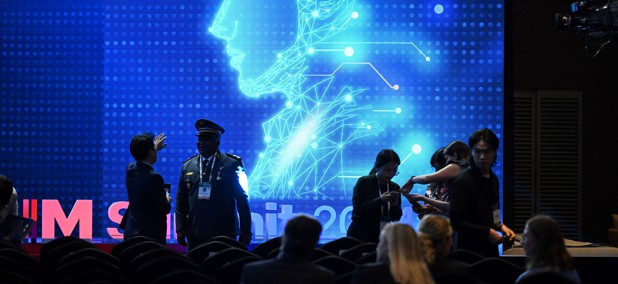
A recent analysis highlights how divergent vocabularies within the armed forces, intelligence community, and civilian research institutions create barriers to effective collaboration on AI‑enabled weapons systems. When one branch refers to an algorithmic decision‑making process as a "targeting module" while another labels a similar capability as a "engagement optimizer," the lack of a common language leads to duplicated effort, misaligned expectations, and potential safety oversights. The article underscores that this semantic dissonance complicates joint exercises and impedes the establishment of unified testing standards.
The underlying tension arises from institutional inertia and the siloed nature of defence procurement. Each service maintains its own acquisition pipeline, often developing bespoke AI solutions without cross‑service consultation. This fragmentation is exacerbated by differing risk appetites, budgetary constraints, and strategic doctrines, which together an environment where interoperability is an afterthought rather than a design principle. Moreover, the rapid pace of commercial AI innovation outstrips the slower, bureaucratic processes of defence agencies, widening the gap between capability and implementation.
Consequences are already manifesting in delayed fielding of AI‑assisted platforms and increased costs due to redundant development. In the short term, the defence establishment may adopt a unified terminology framework, but without institutional reforms, the risk of miscommunication during high‑stakes operations persists. Over the coming year, failure to resolve this lexical discord could erode confidence in AI‑driven combat systems and invite scrutiny from oversight bodies concerned with ethical and legal accountability.
Comments 0