The Supreme Court Orders Compensation for Families of Indians Killed in Ukraine
The apex court has directed the Ministry of External Affairs to issue a public notice inviting compensation claims from the families of Indian nationals killed in the Russia-Ukraine war. This judicial intervention highlights the state's failure to protect its citizens abroad and establishes a precedent for state liability in international conflicts.
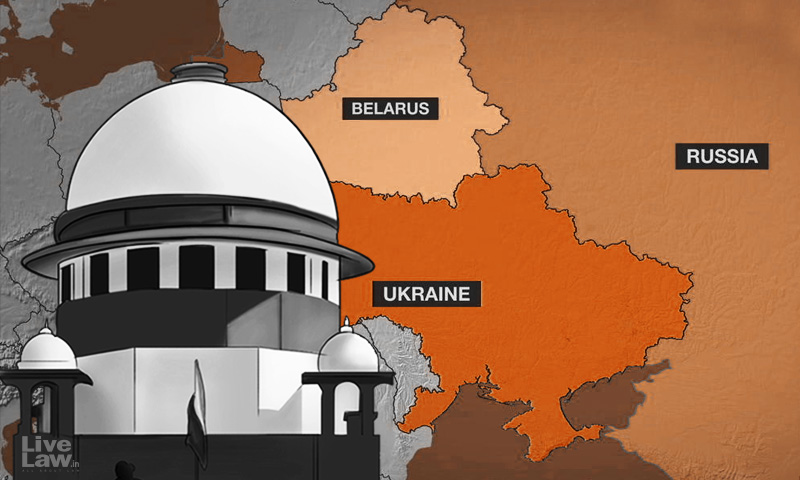
The concrete rupture in the relationship between the Indian state and its citizens abroad is starkly illustrated by the Supreme Court's directive to the Ministry of External Affairs. By ordering a public notice for compensation claims from the families of Indians killed in the Russia-Ukraine conflict, the court has effectively acknowledged a gap in the state's protective duties. For years, Indian nationals have faced risks in conflict zones, often relying on ad hoc government assistance or personal networks for evacuation and support. This ruling transforms that informal support into a formal legal obligation, recognizing that the state bears a responsibility to mitigate the consequences of its citizens' presence in dangerous regions.
The underlying tension is rooted in the friction between foreign policy pragmatism and domestic legal accountability. The Indian government has historically maintained a cautious stance in international conflicts, prioritizing diplomatic relations over the immediate safety of its citizens, particularly in regions like Ukraine where geopolitical interests are complex. The institutional friction arises from the fact that the MEA is not designed to function as a compensation fund but as a diplomatic body. The court's intervention forces a re-evaluation of how the state manages the risks associated with its citizens' global mobility, challenging the traditional view that foreign policy decisions are beyond the reach of domestic judicial scrutiny.
The downstream consequences will be significant for both the state and its citizens. For the families of the deceased, this ruling provides a legal pathway to seek redress, offering a measure of justice and financial support in the face of tragedy. For the state, it sets a precedent that may lead to increased litigation in cases involving citizen safety abroad, potentially straining the MEA's resources and forcing a more proactive approach to risk assessment and evacuation planning. The tangible outcome is a shift in the legal , where the state's failure to protect its citizens in foreign conflicts can be challenged in court, thereby enhancing the accountability of foreign policy decisions.
Comments 0