The Tripartite Pivot: Trump, Xi, and Putin Convene in Shenzhen to Redraw the Global Order
The historic trilateral summit in Shenzhen signals a decisive shift away from Western-led multilateralism, with the three superpowers aligning on nuclear disarmament and regional conflicts. This convergence threatens to isolate the European Union and reshape the geopolitical architecture of the twenty-first century.
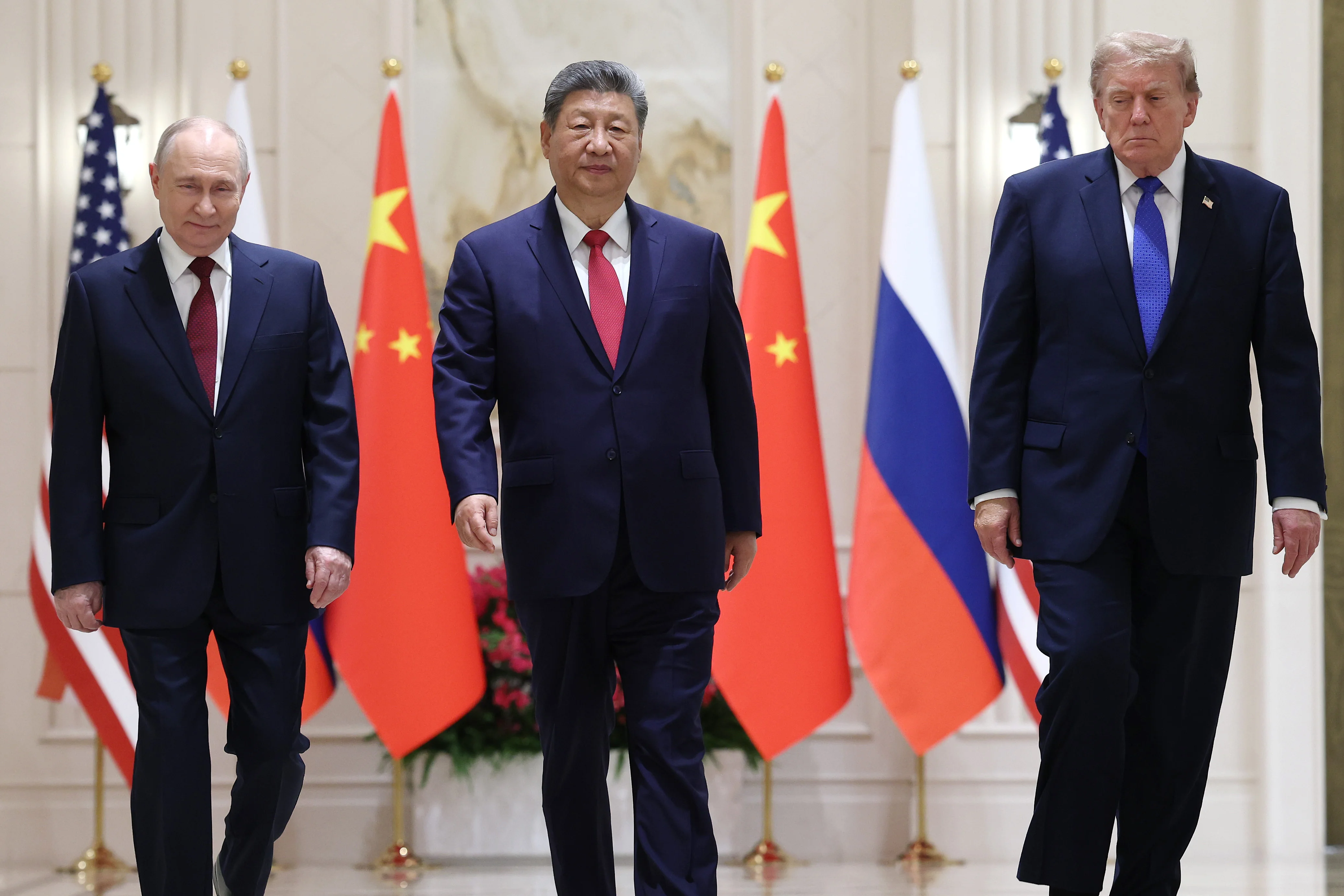
The physical proximity of the three leaders in Shenzhen marks a rupture in the post-Cold War diplomatic structure. For the first time in decades, the United States, China, and Russia have engaged in direct, high-level negotiation without the mediating filter of the United Nations or the G7. The agenda, which includes the fate of Ukraine and the management of nuclear arsenals, suggests a willingness to trade territorial concessions for strategic stability. This is not a summit of friendship, but of calculated containment, where each leader seeks to limit the others' expansion while preserving their own sphere of influence. The mere act of meeting in Chinese territory, rather than a neutral ground, underscores the shifting center of gravity in global power dynamics.
The underlying tension is rooted in the failure of the existing international order to manage the competing interests of these three blocs. The United States, under President Trump, has signaled a retreat from traditional alliance structures, prioritizing bilateral deals over collective security. China, under Xi, seeks to legitimize its rise as a global superpower by positioning itself as a stabilizing force. Russia, under Putin, aims to break its diplomatic isolation and secure recognition of its gains in Eastern Europe. The friction between these objectives is palpable, with each side testing the limits of the others' resolve. The absence of European leaders from the table highlights their marginalization in decisions that will directly affect their security and economic interests.
The downstream consequences of this trilateral alignment will be felt across the global South and in the energy markets. A coordinated approach to nuclear disarmament could reduce the risk of accidental war, but it may also embolden authoritarian regimes to challenge democratic norms. The resolution of the Ukraine conflict, if it occurs, will likely involve compromises that leave NATO's eastern flank vulnerable. For emerging economies, the shift in power dynamics offers new opportunities for trade and investment, but it also exposes them to the risks of great power competition. The world is moving toward a multipolar system, but one that is less predictable and more prone to conflict.
Comments 0