Ultralight Aircraft Guide Extinct Species Along Historic European Skyways
Human pilots operating micro aircraft led fifteen northern bald ibises from Central Europe to overwintering grounds in southern Spain. The arduous aerial campaign marks an extraordinary intervention to re-establish natural migratory routes lost to human encroachment centuries ago.
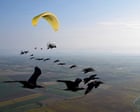
In a remarkable union of human aviation and biological conservation, fifteen juvenile northern bald ibises successfully completed an airborne migration across Europe guided by ultralight aircraft. The birds, hand-raised by human fosters who sat in open-cockpit planes, followed their artificial flight leaders from Central European breeding sites to winter habitats in southern Spain. The project represents a deliberate attempt to manually reinsert an endangered species into its historical ecological niche. The underlying environmental challenge stems from the complete loss of inherited migratory knowledge among captive-bred populations. Extirpated from Europe centuries ago due to hunting and habitat destruction, the species retained the biological capacity for long-distance flight but lacked the cultural memory of geographical corridors. Biologists were forced to substitute human piloting for flock elders, engineering artificial migratory routes through complex airspaces. The success of this airborne experiment offers a structural blueprint for rewilding fragile avian populations facing habitat fragmentation due to industrial farming and urbanization. However, downstream survival depends heavily on whether these hand-guided generations can pass geographical routes down to their offspring naturally. The long-term victory of the project hinges on surviving illegal hunting along Southern European migratory choke points.
Comments 0