Unconditional Basic Income in Peru's Amazon Protects Rainforest
A pilot project providing Indigenous people in the Peruvian Amazon with an unconditional basic income has shown that almost 90 percent of participants adopted environmentally beneficial practices. The study suggests that financial security can be a powerful tool for conservation.
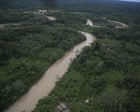
The concrete rupture in the traditional approach to conservation is the success of an unconditional basic income scheme in the Peruvian Amazon. The pilot project, which provided direct financial support to Indigenous communities, resulted in a significant increase in environmentally beneficial practices. This outcome challenges the prevailing notion that conservation requires strict regulation and enforcement, suggesting instead that economic incentives can be more effective in changing behavior. The success of the project has attracted attention from other regions facing similar challenges of balancing development and conservation.
The underlying tension is rooted in the poverty that often drives deforestation. Indigenous communities in the Amazon are frequently forced to clear land for agriculture or logging due to a lack of alternative income sources. The institutional friction arises from the difficulty of implementing such programs at scale, as they require significant financial resources and a robust delivery mechanism. The study highlights the potential of unconditional basic income as a tool for addressing the root causes of deforestation, but it also raises questions about the sustainability of such programs in the long term.
The downstream casualties of deforestation are the global climate and the biodiversity of the Amazon. The tangible outcome of the basic income scheme is a reduction in the pressure on the forest, allowing it to continue playing its vital role in carbon sequestration and ecosystem stability. The 12 month consequence is a potential expansion of the program to other parts of the Amazon, which could have a significant impact on the region's deforestation rate. This shift in conservation strategy will likely influence international climate negotiations, as it provides a concrete example of how economic incentives can be used to achieve environmental goals.
Comments 0