US Army Builds 'Theater Army' in South America to Counter Drug Trafficking
The US Army is establishing a dedicated 'theater Army' in the Western Hemisphere, signaling a significant escalation in its military posture against drug trafficking networks. This strategic shift transforms a logistical support role into a combat-ready presence, altering the geopolitical balance in the region.
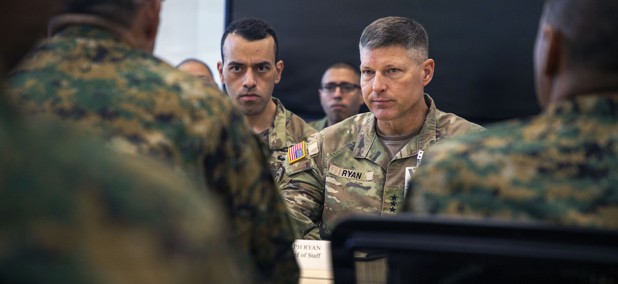
The US Army's decision to build a 'theater Army' in South America marks a profound shift in its strategic posture in the Western Hemisphere. By moving beyond logistical support to establish a combat-ready force, the US is signaling a willingness to engage directly with the violent drug trafficking networks that have destabilized the region. This is not merely a counter-narcotics operation but a broader security initiative that positions the US as a dominant military power in a region long considered a US sphere of influence. The immediate consequence is a heightened state of alert among South American governments, who must now navigate a more complex relationship with their northern neighbor.
The underlying tension in this move is the potential for militarization of a region that has historically struggled with internal security challenges. The US Army's presence, while framed as a counter-drug effort, inevitably raises questions about sovereignty and the potential for overreach. The institutional friction here is between the US desire for regional stability and the South American governments' desire for autonomy. The 'theater Army' concept implies a sustained, large-scale military commitment, which could strain diplomatic relations and fuel nationalist sentiments in countries like Colombia, Peru, and Brazil. The US must carefully manage this perception to avoid being seen as an imperialist force rather than a security partner.
The downstream impact of this strategic shift will be felt in the very fabric of South American societies. The presence of a large US military force could lead to increased surveillance, stricter border controls, and a more aggressive approach to law enforcement, which may disproportionately affect marginalized communities. The drug trafficking networks, faced with a more capable and coordinated military adversary, may adapt by diversifying their routes or increasing their violence. The long-term consequence is a more militarized and polarized region, where the line between counter-narcotics operations and geopolitical competition becomes increasingly blurred. For the US, the challenge will be to achieve its security objectives without triggering a regional backlash that undermines its broader strategic interests.
Comments 0