US Tech Worker Detained in Tamil Nadu Linked to Mumbai Bomb Threats
Police in Tamil Nadu have apprehended a United States national suspected of orchestrating a series of false bomb threats that paralyzed key transit hubs in Mumbai. The arrest signals a sharp escalation in cyber-enabled terrorism, where digital harassment is deployed to inflict physical and economic disruption on India's commercial capital.
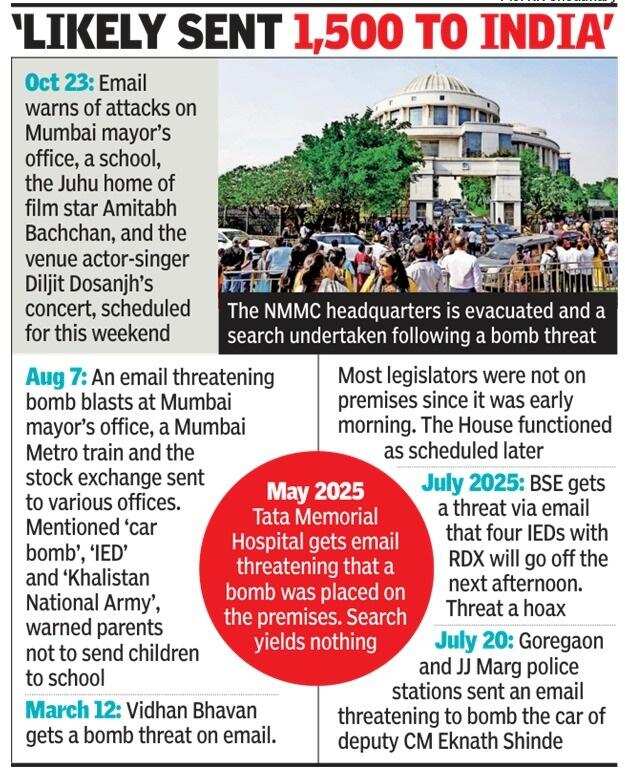
The concrete rupture occurred when law enforcement agencies in Tamil Nadu secured the custody of a US-based technology professional, identifying him as the probable architect behind dozens of credible-sounding bomb threats targeting Mumbai. These threats, disseminated through digital channels, triggered immediate evacuations and security lockdowns at major railway stations and airports, causing significant chaos among commuters and disrupting the city's daily operational rhythm. The suspect's profile as a foreign national with technical expertise marks a departure from traditional local criminal networks, suggesting a more sophisticated, transnational modus operandi that leverages digital anonymity to bypass immediate physical detection.
The underlying tension reveals a growing vulnerability in India's urban infrastructure to non-kinetic attacks. While physical security measures have been hardened over the past decade, the digital front remains porous, allowing actors to exploit the fear factor without deploying actual explosives. This incident highlights the friction between rapid urbanization, which concentrates high-value targets in dense metropolitan areas, and the lagging adaptation of cybersecurity protocols to counter such psychological warfare. The involvement of a foreign national further complicates the narrative, introducing diplomatic and intelligence-sharing challenges that extend beyond domestic policing into international legal frameworks.
The downstream casualties are primarily economic and psychological, manifesting in lost productivity, strained public trust in transit safety, and the diversion of substantial police resources to verify and manage each threat. The tangible outcome is a forced reevaluation of how Indian cities monitor and respond to digital misinformation that carries the weight of a security emergency. This event will likely accelerate the integration of cyber intelligence units with physical security forces, creating a hybrid response model that treats digital threats with the same urgency as physical ones, thereby reshaping the operational doctrine of Indian law enforcement in the coming year.
Comments 0