Washington’s Language for Artificial Intelligence Becomes Policy
An internal State Department cable has directed staff to describe artificial intelligence as super intelligence in official emails, speeches, websites and titles. The order places a contested political term at the centre of American diplomacy, potentially influencing how governments, companies and other institutions frame the technology in negotiations and public communication.
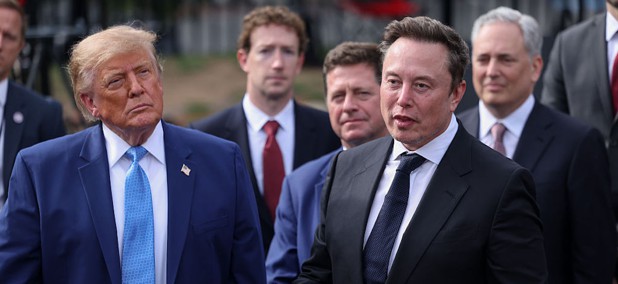
The State Department has instructed its staff to call artificial intelligence super intelligence in internal and external communications, extending a wider change in official terminology across emails, speeches, websites and formal titles. This is more than a stylistic adjustment. Language carried by a government can determine how foreign ministries understand a technology, how companies present their investments and how audiences evaluate the power claimed by new systems. Once the phrase appears in official titles and institutional messaging, it acquires a measure of political authority.
The instruction also exposes friction within the machinery of American technology policy. The Department is an agency built for diplomacy rather than scientific classification, yet its communications now participate in a global contest over the meaning of artificial intelligence. Rivals may accept the terminology, resist it as political branding or adopt it for their own purposes, creating a strange convergence around a term whose technical status remains unsettled. Private firms and research institutions may find that a phrase once associated with advocacy has become entangled with the language of state power, with consequences for public debate, regulatory proposals and international forums.
The winners could include technology companies able to associate their products with the preferred official label and officials seeking a broad narrative for American leadership. The likely losers are the analysts and regulators left with a vocabulary that blurs the distinction between present capability and future aspiration. For foreign partners, repeated exposure may make the phrase part of a common diplomatic grammar, even if they reject its substance. Over the coming year, the consequential question will be whether this official usage hardens into shared language or becomes a conspicuous sign that political language has run ahead of technical understanding.
Comments 0