World’s Wettest Rainstorms Intensify, Raising Flood and Drought Threats
A new study reveals that the planet’s most extreme rainstorms are delivering greater volumes of water in shorter periods, amplifying both flood and drought hazards. The findings warn that societies dependent on stable precipitation patterns face heightened vulnerability.
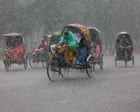
Researchers analysing decades of satellite and ground‑based observations identified a clear trend: storms responsible for roughly half of global rainfall are becoming shorter yet more torrential, depositing larger quantities of water in compressed timeframes. This shift has already manifested in record‑breaking river rises and sudden landslides across several continents, illustrating the concrete rupture of historical rainfall expectations. The study’s authors caution that such volatility undermines traditional flood‑control infrastructure, which was designed for slower, more predictable flows.
The intensification of these storms is rooted in a complex interplay of warming sea‑surface temperatures, altered atmospheric circulation, and increased moisture‑holding capacity of the air. Policy makers in many nations have struggled to reconcile these scientific insights with existing water‑management frameworks, leading to friction between climate scientists, engineers, and legislators. The report highlights a growing discord as governments grapple with the need to upgrade dams, levees, and urban drainage systems while balancing fiscal constraints.
The downstream ramifications are already evident. Communities situated along vulnerable river basins are experiencing more frequent evacuations, while agricultural regions confront paradoxical threats of both inundation and subsequent drought due to rapid runoff. Insurance firms are revising risk models, and international aid agencies are reallocating resources toward climate‑resilient infrastructure. If the trend persists, the global economy may see a measurable uptick in disaster‑related expenditures, reshaping investment priorities in the coming twelve months.
Comments 0