Allahabad High Court Slams UP Police as 'Law Unto Themselves' in Detention Case
The Allahabad High Court has declared the detention of a man by the Uttar Pradesh police unlawful, criticizing the force for operating as a 'law unto themselves.' The court's sharp rebuke highlights a 'sordid state of affairs' in the state's law enforcement, raising serious questions about the rule of law and police accountability.
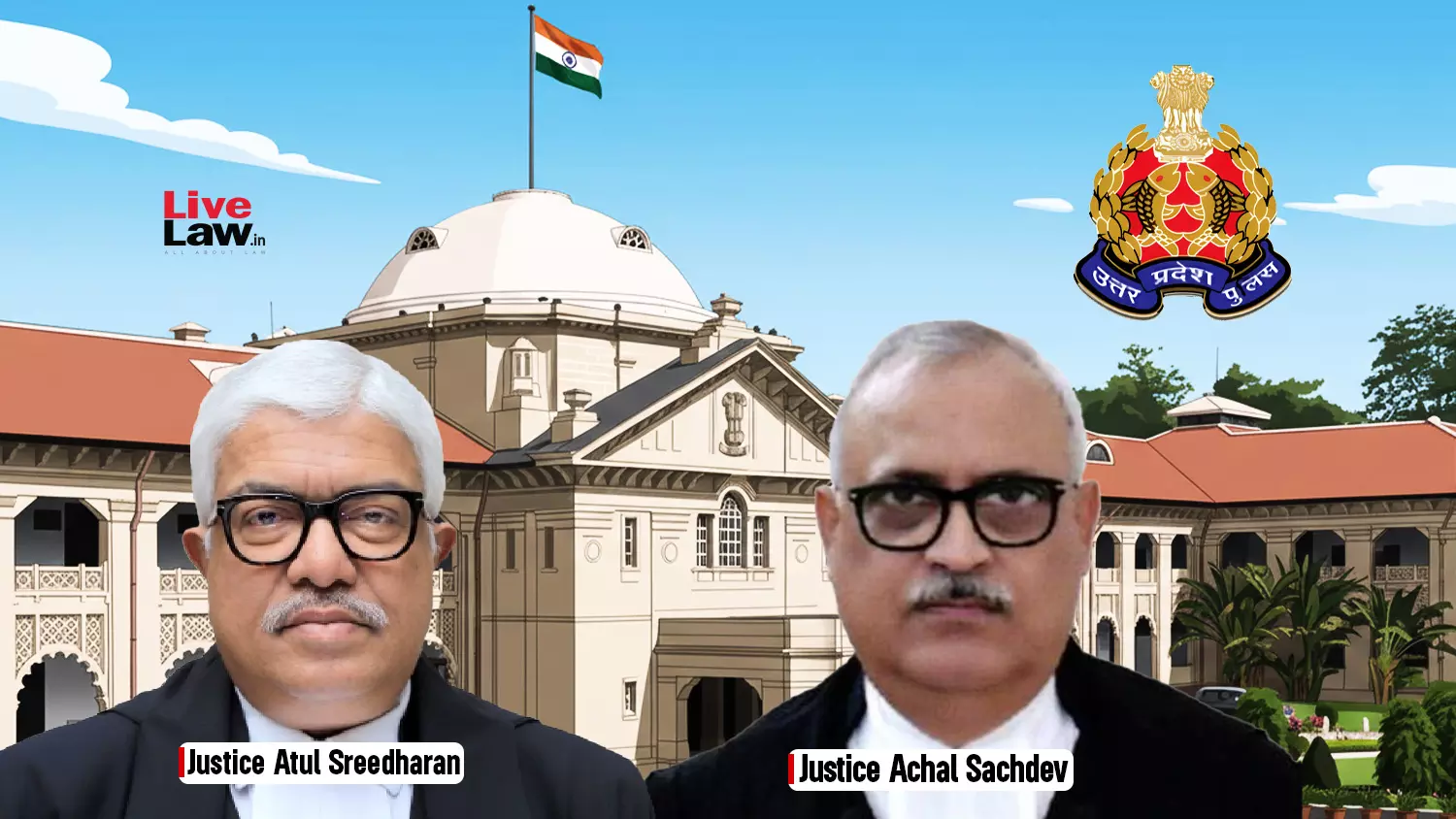
The Allahabad High Court issued a scathing critique of the Uttar Pradesh police, declaring the detention of a man unlawful and describing the force as a 'law unto themselves.' The court's order, which highlighted a 'sordid state of affairs,' marks a significant judicial intervention in the conduct of the state's law enforcement agencies. This concrete rupture in the relationship between the judiciary and the police underscores the growing concerns over the abuse of power and the lack of accountability in the state's policing mechanisms. The immediate impact is a legal victory for the detained individual, who has been released, but it also serves as a public rebuke to the police force.
The underlying tension in this case reflects the broader institutional friction between the judiciary and the executive in Uttar Pradesh, where the police have often been accused of overstepping their legal boundaries. The court's language suggests a deep-seated frustration with the police's tendency to operate outside the framework of the law, particularly in cases involving political or social sensitivities. This friction is exacerbated by the lack of effective oversight mechanisms, which allow such abuses to go unchecked for extended periods. The ruling signals a shift in the judiciary's approach, with a greater willingness to intervene directly in police operations to protect individual rights.
The downstream consequences of this ruling extend beyond the immediate case, as it sets a precedent for challenging police actions in the state. The criticism of the police as a 'law unto themselves' may lead to increased scrutiny of their operations, potentially resulting in stricter adherence to legal procedures. For the detained individual, the ruling represents a restoration of legal rights, but it also highlights the risks faced by citizens in a system where police power is not adequately constrained. The long-term impact will likely be a more robust legal framework for police accountability, driven by the judiciary's insistence on the rule of law.
Comments 0