California Deploys Half a Million Genetically Altered Insects to Combat Extended Mosquito Season
Environmental health authorities in Southern California released hundreds of thousands of laboratory-bred male mosquitoes carrying a specific bacterium to suppress vector populations. This biological intervention aims to counteract the prolonged breeding seasons driven by shifting regional climate patterns.
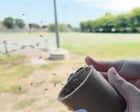
The suburban neighborhoods of the San Gabriel Valley became the testing ground for an aggressive biological pest control initiative as vector control districts escalated their containment strategy. Faced with unusually warm autumn temperatures that extend the active lifespan of disease-carrying insects, officials introduced massive swarms of sterile or bacterially modified male mosquitoes. These insects do not bite humans; instead, they mate with wild females, producing non-viable eggs that rapidly collapse local population density. This strategy exposes a growing reliance on targeted bioengineering over chemical insecticides, which face mounting regulatory bans and chemical resistance from resilient pest strains. However, the deployment has triggered localized public anxiety regarding the ecological consequences of releasing millions of modified organisms into suburban ecosystems. Independent biologists argue that while the short-term reduction in vector-borne disease transmission is guaranteed, the long-term evolutionary response of the target species remains fundamentally unpredictable. The financial and public health outcomes will dictate municipal vector control budgets across the American Southwest for the coming decade. As climate change permanently alters regional entomology, cities that fail to adopt biological suppression programs face surging outbreaks of tropical pathogens. Traditional chemical spraying is rapidly becoming obsolete, forcing municipalities to embrace complex genetic management models.
Comments 0