Chandigarh’s Diwali noise spike stays time-bound as levels fall after 10pm
Noise levels in Chandigarh surged during Diwali celebrations but began to fall after the 10 pm curfew was enforced. Authorities reported that the spike was temporary and within the limits set by the city’s noise regulations. The reduction in sound after the curfew shows that the city’s enforcement measures are having the intended effect during festive periods.
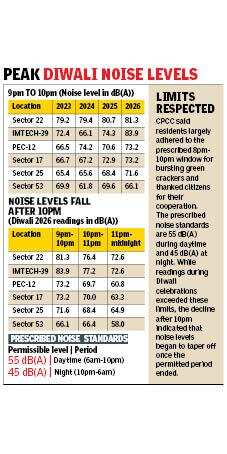
During the evening of Diwali, residents of Chandigarh reported a sharp increase in noise, primarily from firecrackers, loud music and public gatherings. The city’s monitoring system recorded decibel levels that exceeded the permissible limit for several hours, prompting complaints from neighborhoods close to commercial zones. Local police and municipal officials deployed teams to patrol high‑traffic areas, issuing warnings to groups that were creating excessive sound. The surge in noise was most noticeable in the central market and near popular temples where large crowds had gathered.
At 10 pm, the city’s noise curfew came into force, as stipulated by the municipal corporation’s regulations for festivals. Enforcement officers increased their presence on the streets, and many vendors and celebrants reduced the volume of their activities. By midnight, the recorded decibel levels had dropped to within the legal range, and the number of complaints received by the police declined sharply. Officials noted that the temporary nature of the spike demonstrated the effectiveness of the curfew in managing public order during high‑energy celebrations.
The episode highlights the balance that Chandigarh seeks to maintain between allowing cultural festivities and protecting residents from disruptive sound. For citizens, the enforcement of the curfew means a quieter night and less disturbance to sleep, especially for those living in densely populated areas. City planners are reviewing the data collected during the festival to assess whether additional measures, such as designated firecracker zones or stricter penalties, are needed for future events. The experience may also inform other Indian cities that face similar challenges during major holidays.
Comments 0