Climatic Anomalies Elevate Vector Borne Disease Vulnerabilities in Southern India
Recent scientific findings connect persistent El Nino meteorological phenomena to heightened dengue fever transmission risks throughout Kerala. Public health authorities must adapt vector control strategies to changing monsoon dynamics driven by broader atmospheric shifts.
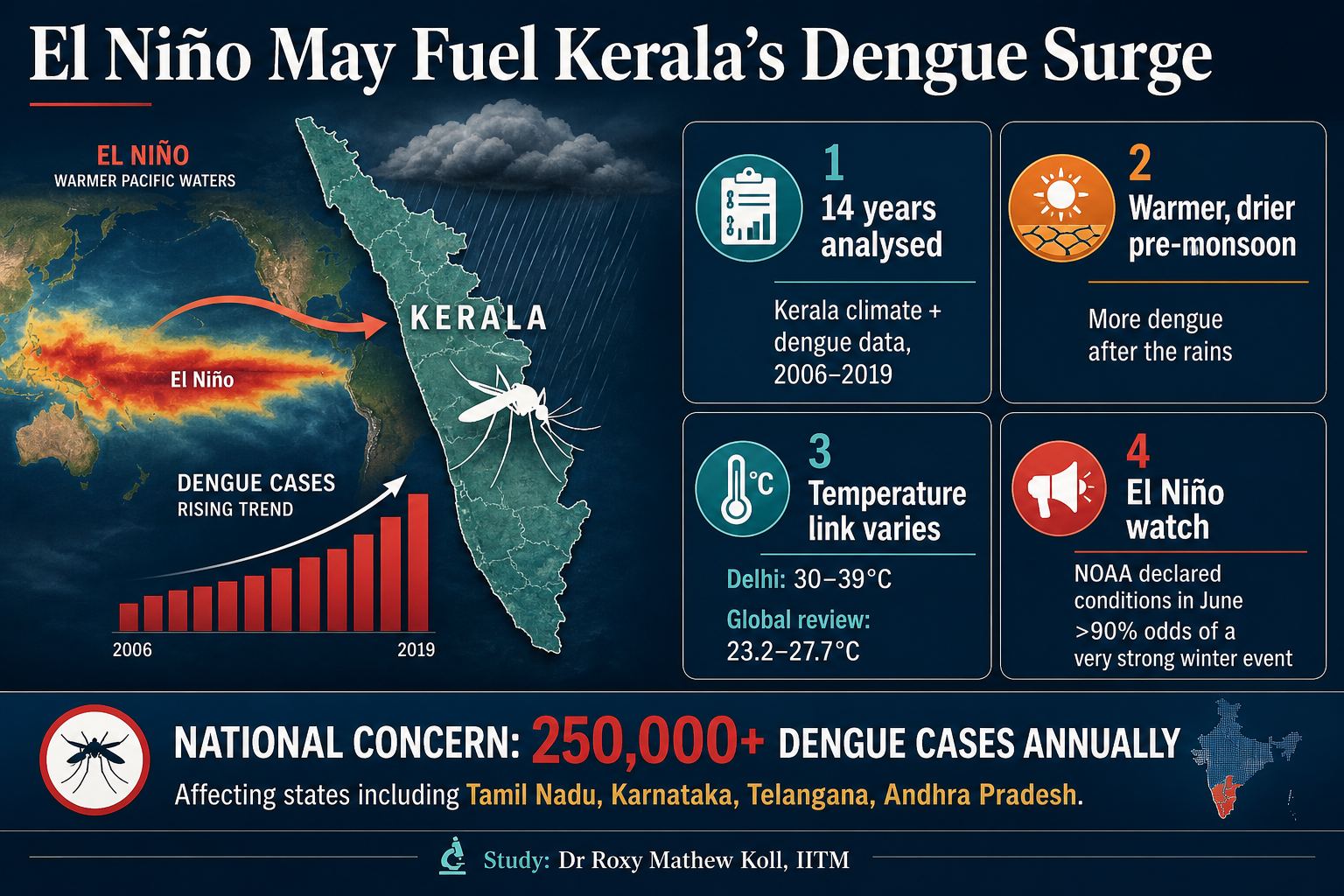
Empirical research conducted by atmospheric scientists has established a direct statistical correlation between anomalous ocean temperature patterns and localized epidemiological crises. The recurrence of El Nino cycles alters regional rainfall distribution, creating optimal breeding conditions for disease vectors across tropical coastlines. Public health infrastructure in southern provinces faces renewed pressure as seasonal disease outbreaks surpass historical baseline projections. Medical authorities struggle to maintain preventative vector eradication campaigns amidst unpredictable precipitation schedules that render traditional spraying timetables obsolete. Local governance bodies must pivot toward community-level sanitation enforcement and early diagnostic deployment to prevent hospital overcrowding during peak transmission windows. The findings illustrate how macro-level meteorological shifts directly impact municipal budgetary allocations. Failure to adapt public health preparedness to these climatic realities results in recurring economic disruption through lost productivity and overburdened clinical facilities. Regional policymakers are now urged to integrate meteorological data feeds directly into municipal epidemiological early-warning systems. This scientific realization bridges the artificial divide between climate policy and domestic healthcare administration.
Comments 0