Delhi's Respiratory Crisis: Supreme Court Confronts the Toxicity of Urban Air
The Supreme Court of India has been presented with harrowing medical evidence indicating that the lungs of children in Delhi are no longer pink, a stark indicator of severe, chronic respiratory damage. This development elevates the pollution crisis from an environmental nuisance to a public health emergency, compelling the judiciary to scrutinize the efficacy of existing regulatory frameworks.
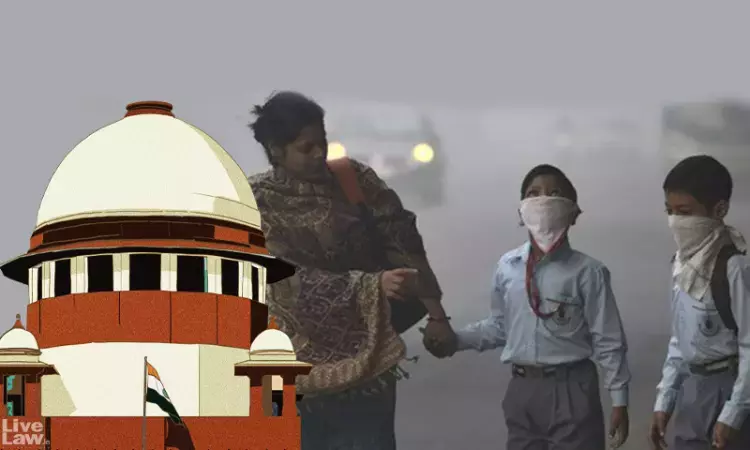
The concrete rupture in this narrative is the medical testimony that the lungs of children in the National Capital Region have lost their healthy pink hue, a visceral sign of irreversible damage caused by prolonged exposure to toxic air. This is not a temporary seasonal fluctuation but a structural failure of urban planning and environmental regulation that has allowed particulate matter to infiltrate the most vulnerable demographic. The immediate shockwave is the potential for the Supreme Court to issue binding directives that go beyond seasonal restrictions, potentially mandating permanent changes to industrial emissions, vehicular standards, and agricultural practices in the NCR region. This shift from advisory to coercive judicial oversight marks a new era in environmental jurisprudence in India.
The underlying tension lies in the conflict between economic growth and public health, a friction that has persisted for decades without resolution. The state government and various stakeholders have often cited economic costs as a barrier to stringent pollution control measures, creating an institutional friction where regulatory agencies are underfunded and under-enforced. The amicus curiae's intervention highlights the inadequacy of current Diwali awareness programs and seasonal stubble burning bans, which are viewed as performative rather than substantive. This exposes a systemic gap where the state's duty to protect the health of its citizens is subordinated to the interests of industrial and agricultural lobbies, a dynamic that the judiciary is now poised to challenge.
The downstream casualties are the millions of residents, particularly children and the elderly, who face a shortened life expectancy and a diminished quality of life due to chronic respiratory diseases. The tangible outcome of this legal battle will be a significant reallocation of resources toward healthcare infrastructure and air quality monitoring, with potential economic impacts on industries that fail to meet new compliance standards. This crisis also has social implications, as the disparity in health outcomes between different socioeconomic groups becomes more pronounced, exacerbating existing inequalities. The long-term consequence is a redefinition of urban living in Delhi, where the cost of pollution is no longer borne silently by the population but is actively contested in the highest court of the land.
Comments 0