Delimitation Fractures the Opposition as Congress and Shiv Sena Reject NCP Support
The Nationalist Congress Party's decision to back the government's delimitation bill has triggered a sharp rupture within the opposition coalition, with the Congress and Shiv Sena (UBT) explicitly withdrawing their support. This schism exposes deep institutional friction over electoral boundaries and threatens to isolate the NCP in the upcoming parliamentary debates.
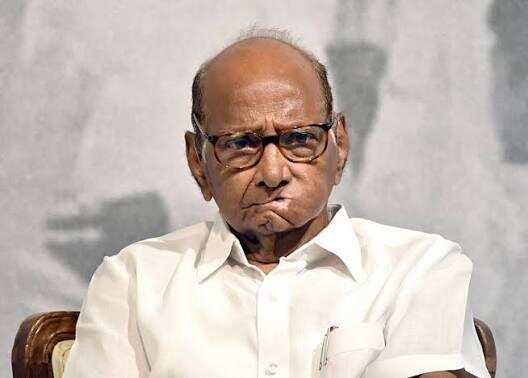
The political in Maharashtra and across the national opposition front has undergone a sudden and violent shift as the NCP (SP) faction moved to endorse the delimitation bill. This maneuver was met with immediate and forceful rejection from the Congress party and the Shiv Sena (UBT), who publicly gave the thumbs-down to the move. The reaction was not merely a procedural objection but a fundamental repudiation of the NCP's strategic pivot, signaling that the alliance is no longer a monolith but a fragile collection of competing interests. The Congress, under the leadership of Rahul Gandhi, has framed the delimitation plan as a threat to the democratic balance, while the Shiv Sena (UBT) has aligned itself with this stance, effectively leaving the NCP (SP) isolated in its support for the government's legislative agenda.
The underlying tension stems from the profound implications of redrawing electoral boundaries, a process that has historically been a source of intense political contestation in India. The opposition's unified front against the bill has now fractured, revealing the divergent calculations of its constituent parties. For the Congress, the issue is framed in terms of national democratic integrity, whereas for regional parties like the NCP, the stakes are often more localized and tied to specific state-level electoral advantages. This divergence has created a chasm in the coalition, with the NCP (SP) attempting to position itself as a pragmatic partner to the government, while its former allies view this as a betrayal of the shared opposition platform. The institutional friction is palpable, with each party now maneuvering to maximize its own political capital in the face of a looming electoral realignment.
The downstream consequences of this rupture are already visible in the weakening of the opposition's collective bargaining power. The ability to present a unified front against the government's legislative agenda is compromised, potentially allowing the ruling party to push through contentious bills with less resistance. For the NCP (SP), the isolation may limit its influence in the broader opposition discourse, while for the Congress and Shiv Sena (UBT), the move reinforces their stance but risks alienating other regional partners who may have been open to a more nuanced approach. The tangible outcome is a more fragmented opposition, with the delimitation bill becoming a litmus test for future alliances and a source of ongoing political instability in the months ahead.
Comments 0