Europe Must Find New Funding Sources as United States Scales Back Defence Aid
British Prime Minister Keir Starmer warned that European nations can no longer rely on U.S. financial support for military capabilities, urging a strategic pivot toward autonomous defence spending. The statement marks a turning point in transatlantic security cooperation and could reshape NATO's fiscal architecture.
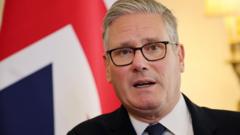
During a high‑profile address to the European Parliament, Starmer highlighted the United States' recent declaration that it will curtail direct financial contributions to allied defence programmes. He argued that the shift reflects broader American budgetary constraints and a recalibration of strategic priorities away from Europe. The British leader called for a collective European response, emphasizing the need for member states to increase domestic defence budgets, develop indigenous weapons systems and to deepen intra‑European defence industry collaboration.
The announcement has immediate implications for ongoing projects such as the Future Combat Air System and the European Sky Shield Initiative, which have relied on U.S. technology transfers and funding guarantees. Analysts predict that the funding gap could delay procurement timelines, prompting countries to reassess procurement strategies and to explore alternative financing mechanisms, including joint ventures and public‑private partnerships. The European Defence Fund, already under strain, may see its mandate expanded to cover a broader range of capabilities.
In the longer term, the reduced American fiscal involvement may accelerate the European Union's pursuit of strategic autonomy, a policy goal that has gained momentum in recent years. Nations that adapt swiftly could emerge as leaders in a reconfigured security market, while those lagging may face capability shortfalls. The evolving dynamic is likely to influence NATO's burden‑sharing calculations, potentially reshaping alliance decision‑making processes over the next twelve months.
Comments 0