Food Inflation Threatens Festive Retail Season in West Bengal
Rising food prices are expected to dampen consumer spending during the upcoming wedding and festive seasons in West Bengal. This economic headwind poses a significant challenge for retailers and businesses that rely on seasonal demand to drive their annual revenue.
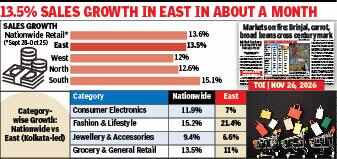
The concrete rupture in the expected economic boom of the festive season is the looming threat of food inflation, which is projected to erode consumer purchasing power in West Bengal. As the state prepares for the traditional wedding and festival period, which is a critical period for retail sales, the rising cost of essential food items is likely to divert household spending away from discretionary purchases. This shift in consumer behavior is a direct consequence of the broader macroeconomic pressures affecting the region, including supply chain disruptions and global commodity price volatility. The immediate shockwave is felt by retailers, who are now facing a more cautious consumer base that is prioritizing basic needs over festive indulgence.
The underlying tension is between the structural drivers of inflation and the cyclical nature of retail demand. While the festive season is traditionally a period of high consumption, the persistent rise in food prices is creating a ceiling on how much households can spend. This friction is exacerbated by the fact that food inflation is often inelastic, meaning that consumers cannot easily reduce their consumption of essential items. As a result, the pressure on discretionary spending is intensified, leading to a squeeze on the retail sector. The institutional response from the government and regulatory bodies will be critical in determining whether this inflationary pressure can be contained or if it will continue to erode consumer confidence.
The downstream casualties of this economic trend are likely to be small and medium-sized retailers, who have less resilience to demand shocks than larger chains. The tangible outcome is a potential slowdown in the growth of the retail sector, which could have broader implications for employment and economic activity in the region. For the state government, this presents a challenge in balancing the need to stimulate economic growth with the need to manage inflation. The long-term impact could be a shift in consumer preferences towards more affordable alternatives, with potential implications for the structure of the retail market. The ability of the state to mitigate the impact of food inflation will be a key determinant of the economic performance of the festive season.
Comments 0