Gandhi March to Supreme Court: A Test of Judicial Authority Amidst Political Tension
Rahul and Priyanka Gandhi led a massive march from Connaught Place to the Supreme Court, drawing thousands of supporters and triggering heightened security across Delhi. The event underscores the escalating confrontation between the opposition and the state, with the judiciary positioned as the final arbiter in a deepening political crisis.
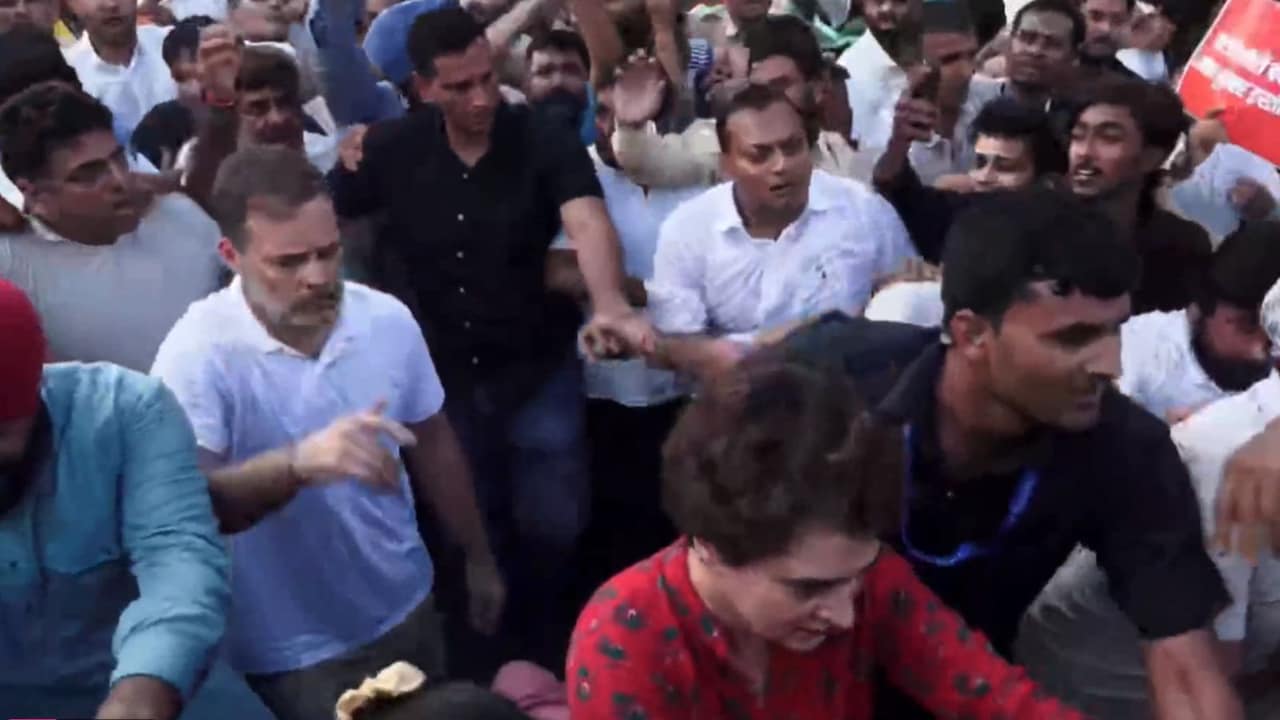
The streets of central Delhi became a theater of political confrontation as Rahul Gandhi and Priyanka Gandhi led a large-scale march toward the Supreme Court. The route, stretching from Connaught Place to Mandi House, was packed with thousands of supporters, transforming a commercial hub into a site of intense political expression. Security forces were deployed in heavy numbers, tightening the perimeter around the national capital and signaling the high stakes of the event. This was not merely a protest; it was a direct appeal to the highest court of the land, a move that bypasses the legislative and executive branches to seek redress or validation from the judiciary. The sheer scale of the gathering demonstrated the enduring mobilization capacity of the opposition, even in the face of significant administrative and security challenges.
The underlying tension is rooted in a broader struggle for institutional legitimacy. By marching to the Supreme Court, the opposition is framing the current political impasse as a constitutional crisis, one that only the judiciary can resolve. This move places immense pressure on the court to act as a neutral arbiter in a dispute that is deeply partisan. The state's response, characterized by heightened security and strict enforcement of public order laws, reflects a desire to contain the political fallout and prevent the event from escalating into a larger confrontation. The friction here is between the democratic right to protest and the state's imperative to maintain order, a balance that is increasingly difficult to strike in a polarized political environment.
The immediate outcome is a heightened state of alert in the capital, with potential disruptions to traffic and daily life. For the opposition, the march serves as a powerful symbolic act, reinforcing their narrative of being under siege and seeking justice through legal channels. For the government, the event is a challenge to its authority and a test of its ability to manage dissent without appearing repressive. The downstream impact will be felt in the political discourse, with both sides likely to use the event to rally their bases and frame the narrative for the coming weeks. The judiciary, meanwhile, faces the difficult task of navigating this political minefield while upholding its independence and credibility.
Comments 0