In 2020, Bengaluru woman’s Rs 3 lakh FD matured at credit co-op society; after 6 years of waiting, forum orders refund with 9.5% interest, Rs 35,000 compensation
A consumer forum in Gujarat ordered a cooperative credit society to return a Bengaluru woman’s matured fixed deposit of three lakh rupees, adding 9.5% interest and a compensation of thirty‑five thousand rupees. The decision comes after the woman waited six years for the society to honor the deposit.
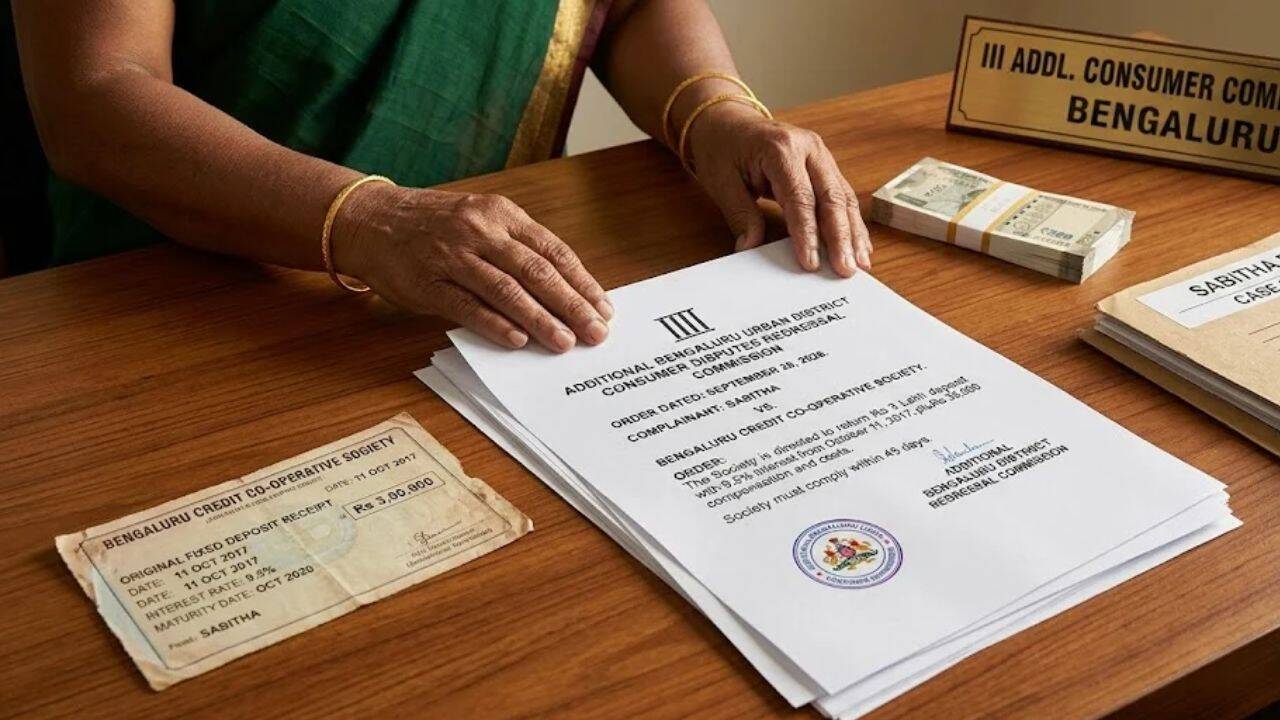
A consumer dispute panel in Gujarat has ruled in favor of a woman from Bengaluru who had been waiting for the return of a fixed deposit that matured several years ago. The deposit, worth three lakh rupees, was placed with a cooperative credit society that later failed to honor the maturity payment. After a six‑year wait marked by repeated requests and unfulfilled promises, the forum ordered the society to refund the principal amount along with interest calculated at 9.5 percent per annum. The decision also includes a compensation of thirty‑five thousand rupees for the inconvenience caused.
Cooperative credit societies in India are governed by specific regulations that require them to safeguard members’ savings and to honor deposit maturities promptly. When a society does not meet these obligations, aggrieved members can approach consumer courts, which have the authority to enforce repayment and award damages. In this case, the forum examined the society’s financial records, the timeline of the woman’s requests, and the statutory interest rate applicable to delayed payments. The panel concluded that the society’s conduct violated both the cooperative’s bylaws and consumer protection statutes.
The ruling is significant for Indian readers because fixed deposits represent a major portion of household savings, and delays in repayment can erode financial security for ordinary families. The order reinforces the message that financial institutions, including cooperatives, must respect the terms of their agreements and that consumers have legal recourse when those terms are breached. It also serves as a warning to other societies that lax handling of deposits may lead to costly legal interventions and compensation awards.
Comments 0