India's Fuel Price Stability Masks a Soaring Import Bill Amid Global Oil Surge
Oil Minister Hardeep Singh Puri highlighted that Indian petrol and diesel prices rose only 7% over four years, in stark contrast to 50-70% increases globally. However, this stability comes at the cost of a 60% jump in the import bill, reaching $16 billion in October 2026 as Brent crude prices nearly doubled.
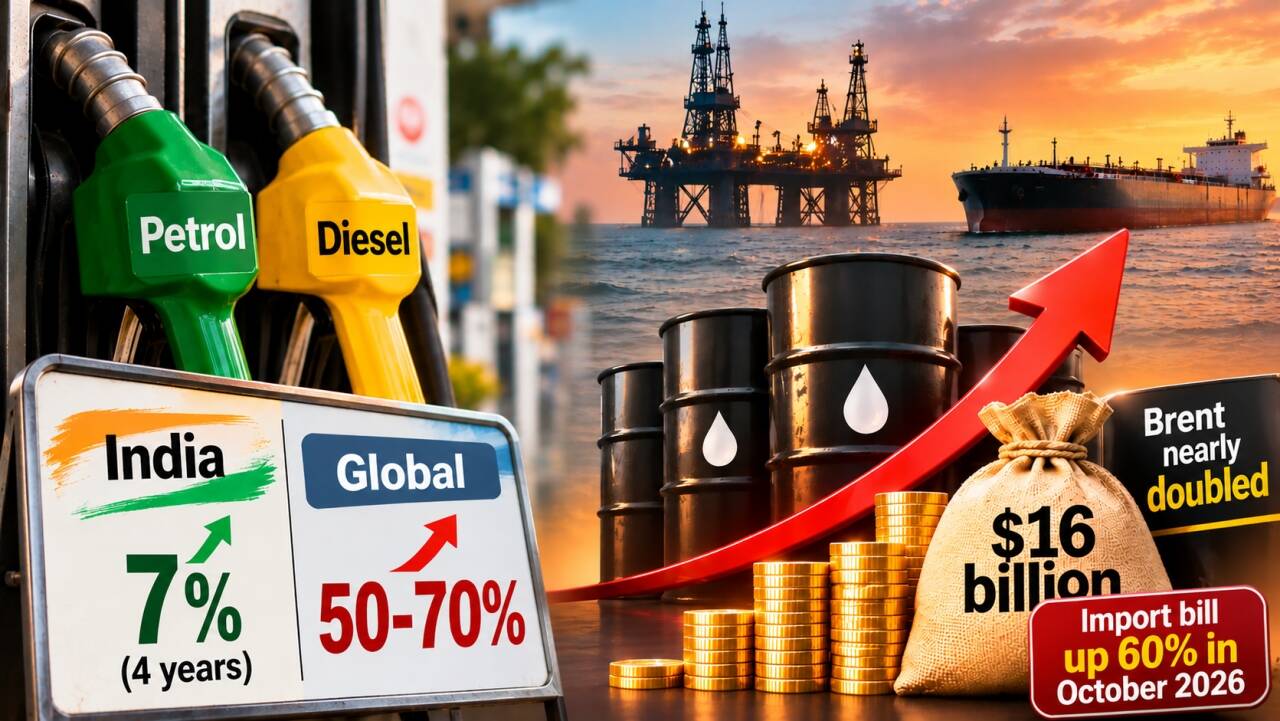
The minister's statement reveals a concrete rupture between domestic consumer pricing and the underlying cost of energy imports. While Indian consumers have experienced relative price stability, the government and oil marketing companies are absorbing the brunt of the global oil price surge. The 60% increase in the import bill to $16 billion in a single month illustrates the severe fiscal strain resulting from the decision to keep retail prices low, a strategy that prioritizes political stability over immediate financial efficiency.
The underlying tension lies in the balancing act between political expediency and economic sustainability. By insulating domestic prices from global fluctuations, the state assumes the risk of rising import costs, which can lead to increased subsidy burdens and potential deficits in the oil sector. This institutional friction is exacerbated by the global context, where Brent crude prices have nearly doubled, forcing India to spend significantly more for the same volume of oil. The strategy reflects a deliberate choice to protect the common citizen from inflationary shocks, even at the expense of corporate profitability and fiscal health.
The downstream consequences include a potential erosion of the financial reserves of state-owned oil companies, which may impact their ability to invest in refining capacity and downstream infrastructure. For the broader economy, the rising import bill contributes to a wider current account deficit, putting pressure on the rupee and increasing the cost of borrowing. The tangible outcome is a hidden tax on the national economy, where the cost of cheap fuel is paid not by the consumer at the pump, but by the state through increased expenditure and reduced fiscal flexibility.
Comments 0