JWALA MK-1: India's Autonomous Drone Shield Proves Its Worth at Pokhran
The successful test of the JWALA MK-1 micro-missile marks a decisive shift in India's counter-drone doctrine, moving from reactive interception to autonomous, AI-driven neutralization. This capability closes a critical vulnerability in air defense, ensuring that low-altitude threats can be dismantled before they reach strategic targets.
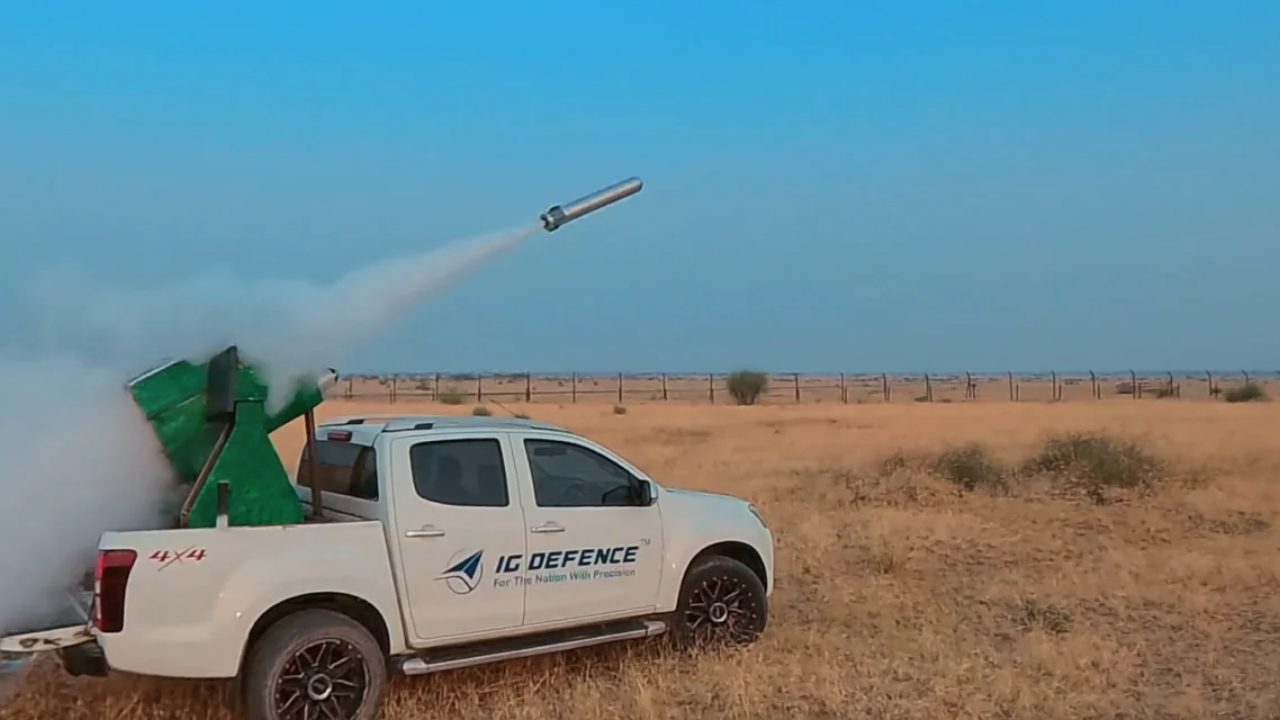
The desert sands of Pokhran witnessed a quiet but profound alteration in the balance of aerial warfare as the JWALA MK-1 system demonstrated its lethality. Unlike traditional air defense systems that rely on human operators to track and engage, this micro-missile utilizes artificial intelligence to identify and neutralize hostile drones within a two to five kilometer radius. The test, conducted by IG Defence, confirms that the system can operate independently, a capability that is essential in the fast-paced environment of modern drone swarms where reaction time is measured in milliseconds rather than seconds.
This development addresses a long-standing friction point in Indian military strategy: the asymmetry between cheap, disposable drones and expensive, complex air defense networks. For years, the Indian Army has struggled to protect high-value assets from low-cost aerial threats that can bypass traditional radar systems. The integration of AI for target identification and guidance represents a structural upgrade in the defense ecosystem, allowing for a more cost-effective and resilient shield. It signals a move away from passive defense toward an active, intelligent perimeter that can adapt to evolving threat patterns in real time.
The downstream impact of this technology is a significant reduction in the strategic risk posed by drone warfare, a domain that has become increasingly central to global conflicts. By securing the low-altitude airspace, India can protect critical infrastructure, military installations, and civilian populations with greater confidence. This capability also enhances India's position in the global defense market, offering a proven, indigenous solution to a problem that affects nations worldwide. The success at Pokhran is not merely a technical milestone but a strategic assurance that the nation's air sovereignty is no longer porous to the most modern forms of aerial aggression.
Comments 0