Karnataka's Mental Health Surge: A 20-Fold Rise in Public Consultations
Mental health consultations in Karnataka's public institutions have increased twenty-fold over the past decade, signaling a major shift in societal attitudes. This surge places immense strain on the state's healthcare infrastructure, highlighting the urgent need for expanded resources and specialized personnel.
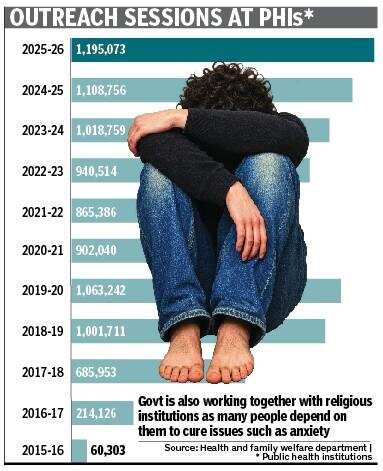
The concrete rupture in Karnataka's public health is the twenty-fold increase in mental health consultations within public institutions over the last ten years. This is not a gradual trend but an exponential surge that has overwhelmed the existing healthcare system. The immediate shockwave is felt in the clinics and hospitals, where demand for psychiatric and psychological services has outstripped the available capacity. This shift reflects a profound change in societal norms, where seeking help for mental health issues is no longer stigmatized but is increasingly recognized as a necessary component of overall well-being.
The underlying tension in Karnataka's healthcare system is the mismatch between the rapid growth in demand and the slow pace of resource allocation. The state's public health infrastructure, designed primarily for physical ailments, is ill-equipped to handle the complexities of mental health care. The friction here is institutional; it involves a lack of specialized training for general practitioners, insufficient funding for mental health programs, and a shortage of qualified psychologists and psychiatrists. This gap between need and provision creates a bottleneck that delays treatment and exacerbates the suffering of patients.
The downstream casualties of this surge are the patients themselves, who face long wait times and inadequate care. The tangible outcome is a strain on the state's healthcare budget, which must now prioritize mental health services in its planning. The structural consequence is a potential redefinition of public health policy in Karnataka, where mental health will be treated with the same urgency as infectious diseases or chronic conditions. This shift will require significant investment in training, infrastructure, and community outreach to ensure that the system can sustain the increased demand.
Comments 0