Kerala NEET PG 2026 Merit List Published, Shaping Medical Admissions
The Kerala Council of Examinations released the final merit and category list for the 2026 NEET PG exam, determining candidate allocations across state medical colleges. The outcome will influence the distribution of postgraduate seats for the coming academic year.
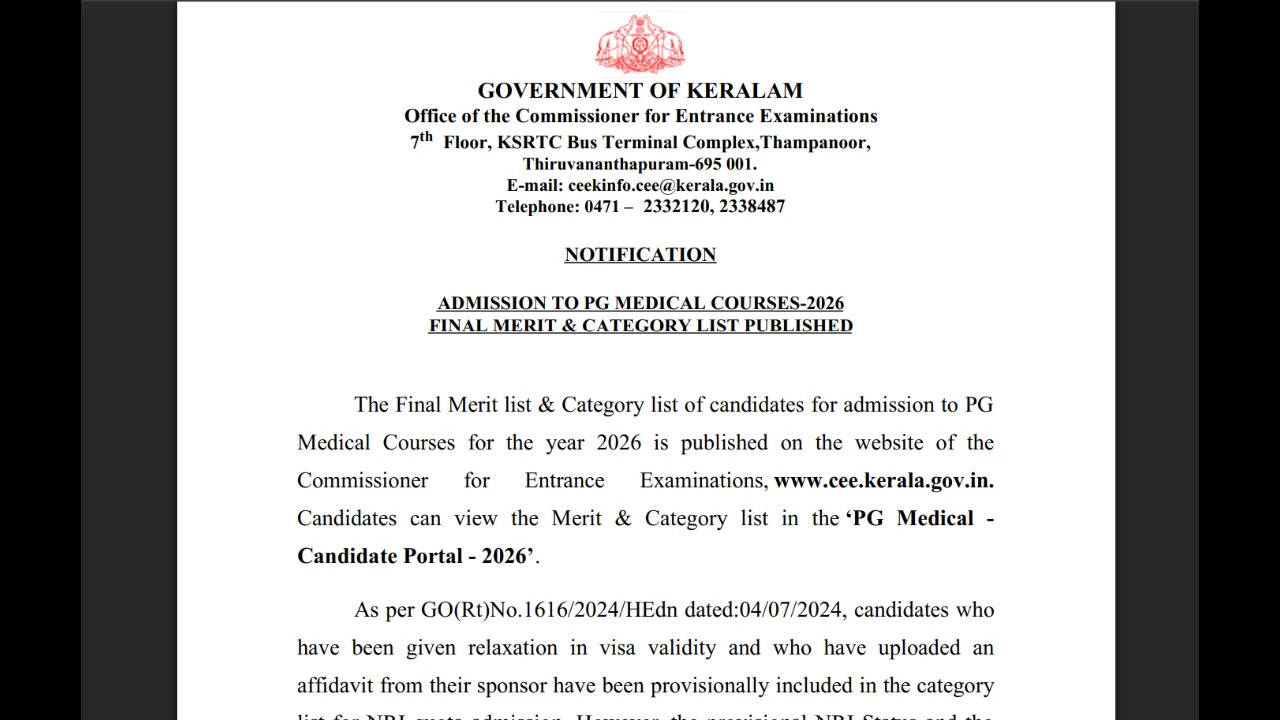
The Kerala Council of Examinations (CEE) posted the definitive merit list for the National Eligibility cum Entrance Test for Post‑Graduates (NEET PG) 2026, alongside a detailed category breakdown. The publication marks the culmination of a rigorous selection process that evaluated thousands of aspirants seeking entry into postgraduate medical programmes across the state. With the list now public, medical colleges in Kerala can proceed with seat allocation, while candidates await confirmation of their allotted specialties and institutions, a step that directly affects their career trajectories.
The underlying tension stems from the perennial debate over reservation policies and the balance between merit and social equity in medical education. Kerala's allocation framework incorporates multiple categories, including general, OBC, SC, ST, and economically weaker sections, each with distinct seat quotas. Critics argue that the system sometimes compromises academic excellence, while proponents contend that it promotes broader access to advanced medical training. The release of the list therefore reignites discussions among policymakers, educators, and student bodies about the optimal configuration of reservation norms.
The downstream impact of the merit list will be felt across the state's healthcare ecosystem. Newly admitted postgraduate students will soon join teaching hospitals, augmenting the pool of specialist physicians and potentially alleviating regional shortages in certain medical fields. Moreover, the distribution of seats may affect the migration patterns of doctors, as candidates who secure placements in Kerala are less likely to seek opportunities abroad. Over the next twelve months, the composition of the postgraduate cohort could shape the quality of care delivered in public hospitals, influencing health outcomes for the broader population.
Comments 0