Maharashtra Mandates Transparent Hospital Pricing in Marathi and English
The Maharashtra government has issued a new directive requiring all hospitals to display rate lists in both Marathi and English, aiming to curb arbitrary billing practices. This move addresses a long-standing grievance among patients who often face opaque medical costs.
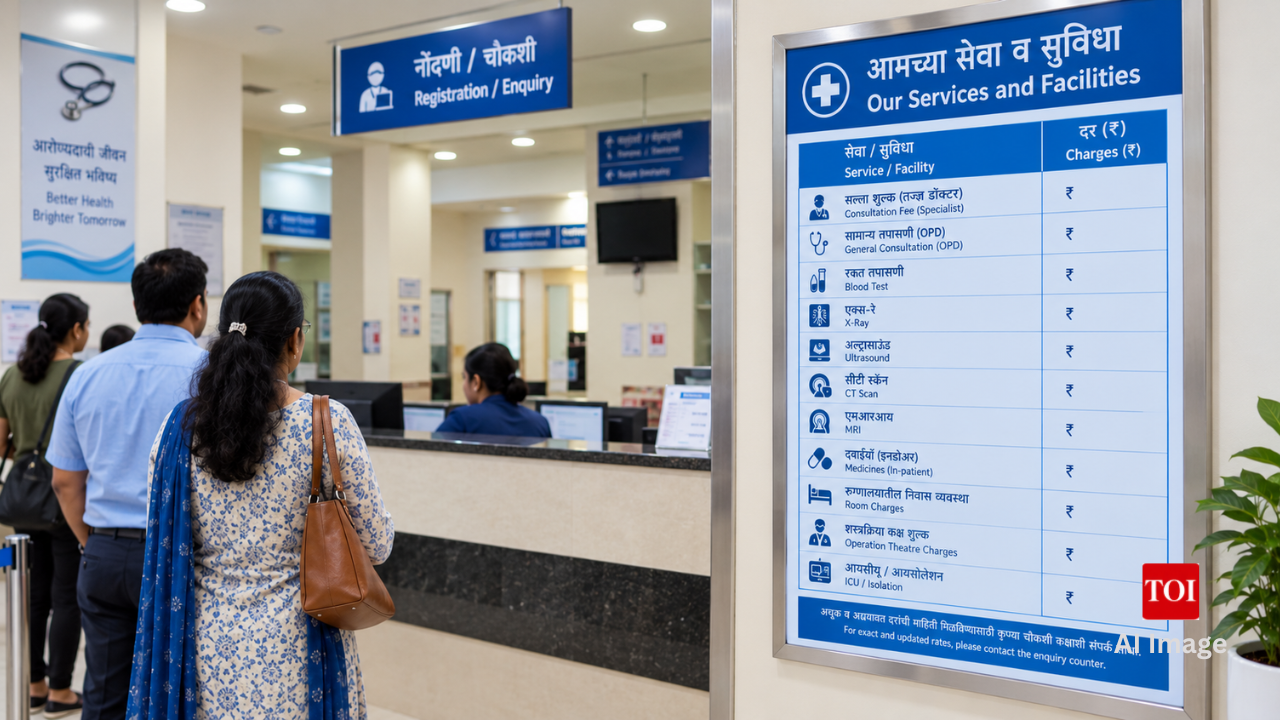
The concrete rupture is the enforcement of a new regulatory standard that demands transparency in the most vulnerable moments of a patient’s life. By mandating that rate lists be displayed in both the regional language and English, the state government is acknowledging the linguistic diversity of its population and the power imbalance inherent in hospital billing. This is not merely an administrative change; it is a direct intervention into the financial dynamics of the healthcare sector, forcing institutions to expose their pricing structures to public scrutiny.
The underlying tension is the historical opacity of hospital billing in India, where patients and their families often find themselves at the mercy of complex, unexplained charges. The new rule targets this friction by creating a baseline of accountability. Hospitals can no longer hide behind vague descriptions or exclusive use of English, which may exclude a significant portion of the local population. This institutional shift puts pressure on hospital administrators to standardize their pricing and justify their costs, moving away from a model of information asymmetry.
The downstream outcome is a potential reduction in medical inflation and an increase in patient trust. When costs are visible and comparable, patients can make more informed decisions about where to seek care, leading to a more competitive and efficient healthcare market. However, the success of this policy will depend on rigorous enforcement and the ability of patients to actually use this information. In the long term, this could lead to a broader cultural shift towards financial literacy in healthcare, empowering citizens to challenge arbitrary charges and demand value for money.
Comments 0