MPSC Protests Conclude with Student Victory, Exposing Administrative Fragility
The prolonged agitation by Maharashtra Public Service Commission candidates has ended with a significant concession, marking a rare instance where student-led protests have forced a structural change in state recruitment processes. This outcome underscores the deepening crisis of trust between the youth and the state's administrative machinery.
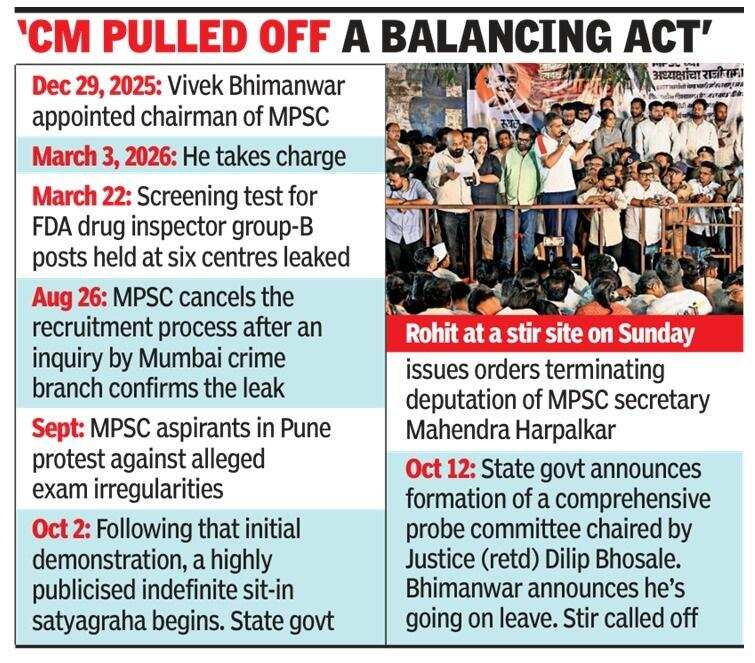
The conclusion of the MPSC agitation in Maharashtra represents a tangible shift in the power dynamics between the state's bureaucracy and its aspiring civil servants. After weeks of sustained pressure, the government has yielded to key demands, effectively validating the protesters' claims of systemic irregularity in the recruitment process. This is not merely a resolution of a dispute but a recognition that the existing administrative safeguards were insufficient to maintain public confidence. The victory for the students signals that organized, persistent civil disobedience can now override bureaucratic inertia, setting a precedent for future labor and student movements across the state.
The friction that precipitated this crisis stems from a long-standing perception that the MPSC process is opaque and susceptible to manipulation, a sentiment that has festered among the educated youth of Maharashtra. The state's initial reluctance to engage with the protesters' specific grievances, preferring to rely on legalistic defenses, only exacerbated the tension. The underlying institutional failure is one of transparency; the state could not demonstrate, in real-time, the integrity of its selection mechanisms. This opacity has allowed rumors of bias and corruption to take root, turning a recruitment cycle into a political flashpoint that threatened the stability of the state's administrative pipeline.
The tangible outcome of this confrontation is a recalibration of the state's approach to public service recruitment. The government's concession may lead to the implementation of more rigorous, auditable processes, but it also risks creating a culture where administrative decisions are made under the threat of protest rather than through established legal channels. For the state, the immediate casualty is its institutional authority; the fact that it had to capitulate to extrajudicial pressure weakens its standing. For the students, the victory is bittersweet, as it highlights the fragility of meritocratic ideals in a system where trust is the primary currency. The long-term consequence is a more vigilant, and potentially more adversarial, relationship between the state and its future civil servants.
Comments 0