Oman Displaces the U.S. as India's Premier LNG Supplier
Oman has overtaken the United States as India's largest supplier of liquefied natural gas for September, a shift driven by European buyers snapping up American cargoes. This realignment underscores the volatility of global energy markets and India's strategic pivot towards more reliable, regional supply sources.
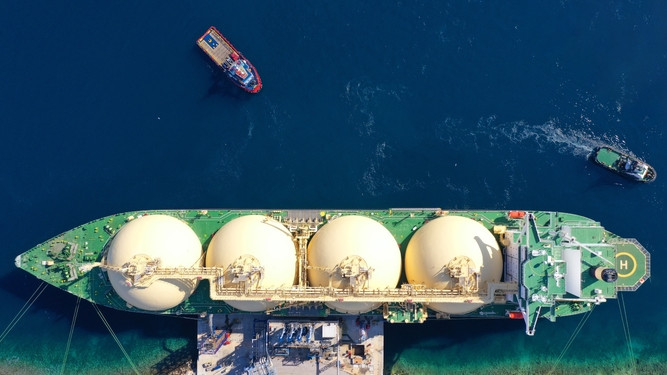
The concrete rupture in the global energy trade map is the displacement of the United States by Oman as India's top LNG supplier. This is not a minor fluctuation but a significant shift in the flow of one of the world's most critical energy commodities. The immediate shockwave is felt in the pricing and logistics of LNG, as Indian buyers, previously reliant on American spot cargoes, now turn to Omani contracts. This shift reflects a pragmatic response to the intensifying competition for U.S. supply, which is being absorbed by European buyers seeking to replace Russian gas. The outcome is a more fragmented and competitive market, where India must negotiate harder to secure favorable terms.
The underlying tension is the geopolitical competition for energy resources, with the U.S. and Europe vying for the same limited supply of LNG. Institutional friction arises from the conflicting interests of these major economies, each seeking to secure its own energy security. For India, this creates a dilemma: relying on the U.S. exposes it to the volatility of European demand, while relying on Oman may limit its long-term energy diversification. The friction is also evident in the diplomatic relationships, as India must balance its strategic partnership with the U.S. against its immediate economic needs. This tension is likely to persist as long as the global energy market remains tight and competitive.
The downstream casualties of this shift include potential price increases for Indian consumers and industries, as the cost of securing LNG from alternative sources may be higher. The tangible outcome is a more complex and costly energy procurement strategy for India, requiring greater diplomatic and logistical effort. The systemic reverberation is a strengthening of Oman's position as a key energy player in the region, with increased leverage over its customers. The long-term consequence is a more interconnected and interdependent global energy market, where the actions of one region can have immediate and significant impacts on another.
Comments 0